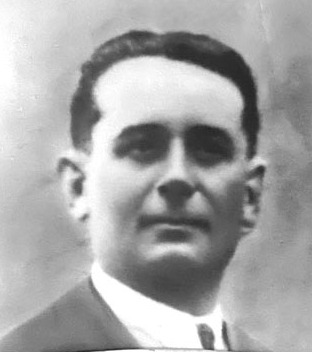
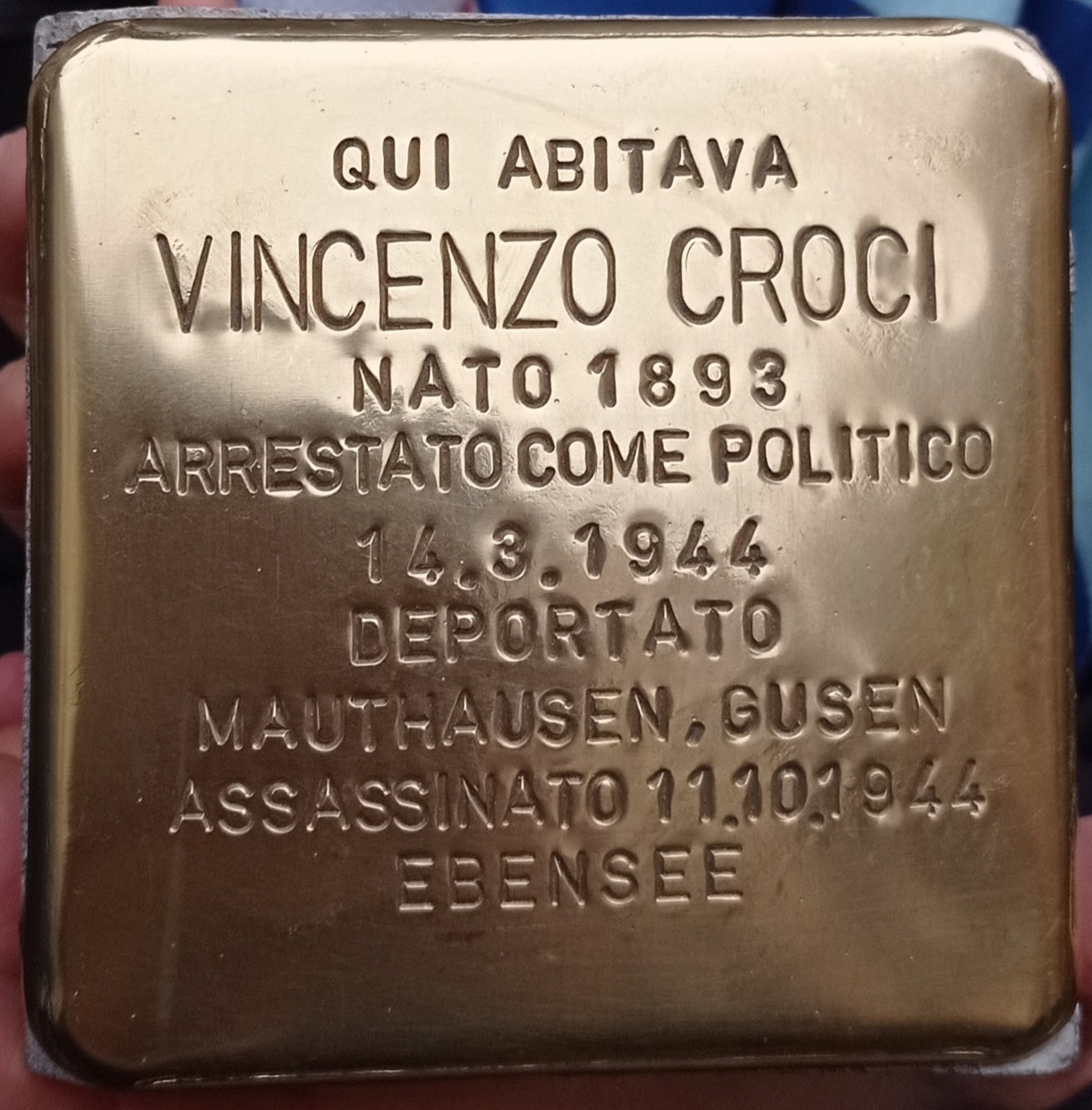
Vincenzo Croci
He was born in Cerro Maggiore on January 6, 1893, and from there he moved to Sesto San Giovanni, where he was hired at Breda as a drill press operator.
His son recounts that at the bar near their home, which Vincenzo frequented with friends, someone used threats to force him to take the Fascist Party membership card, which he had previously refused to hold. As for the rest of the family, the son says, "We never noticed him being involved in clandestine activities; we only listened to Radio London for ten minutes in the evening, late at night."
Then came the great strike of March 1944: for a week, all the factories in Northern Italy came to a halt, the Corriere della Sera was not printed, and the trams did not run.
Unfortunately, the response was immediate: the SS, Fascist police, and GNR (National Republican Guard) militia began arresting everyone who had been involved or who was known as a dissident. Vincenzo was taken from his home at two in the morning, between March 13 and 14, by three men in civilian clothes. He was taken immediately to the San Fedele prison in Milan and then to San Vittore, where the Streikertransport (strikers' transport) was compiled for transfer to Bergamo, the departure point for Germany.
The convoy—one of the largest from Italy, consisting of 566 men and 7 women—departed on March 17, under the eyes of the city's population who watched the long procession. His son and wife were also among the crowd: "I managed to enter the station; from a distance, I saw my father being loaded onto the wagons along with the others, and that was the last time I saw him; we never heard anything about him again."
Today, we have been able to reconstruct his journey until the end: after being registered with the number 58831, he was transferred to the terrible Gusen camp and then to Ebensee, where tunnels for rocket construction were excavated with unspeakable human effort.
Vincenzo endured for seven months. He died on October 11, 1944, without his family ever receiving word.
His son recounts that at the bar near their home, which Vincenzo frequented with friends, someone used threats to force him to take the Fascist Party membership card, which he had previously refused to hold. As for the rest of the family, the son says, "We never noticed him being involved in clandestine activities; we only listened to Radio London for ten minutes in the evening, late at night."
Then came the great strike of March 1944: for a week, all the factories in Northern Italy came to a halt, the Corriere della Sera was not printed, and the trams did not run.
Unfortunately, the response was immediate: the SS, Fascist police, and GNR (National Republican Guard) militia began arresting everyone who had been involved or who was known as a dissident. Vincenzo was taken from his home at two in the morning, between March 13 and 14, by three men in civilian clothes. He was taken immediately to the San Fedele prison in Milan and then to San Vittore, where the Streikertransport (strikers' transport) was compiled for transfer to Bergamo, the departure point for Germany.
The convoy—one of the largest from Italy, consisting of 566 men and 7 women—departed on March 17, under the eyes of the city's population who watched the long procession. His son and wife were also among the crowd: "I managed to enter the station; from a distance, I saw my father being loaded onto the wagons along with the others, and that was the last time I saw him; we never heard anything about him again."
Today, we have been able to reconstruct his journey until the end: after being registered with the number 58831, he was transferred to the terrible Gusen camp and then to Ebensee, where tunnels for rocket construction were excavated with unspeakable human effort.
Vincenzo endured for seven months. He died on October 11, 1944, without his family ever receiving word.