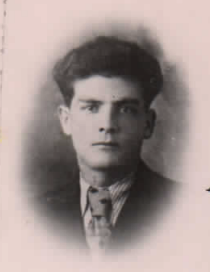
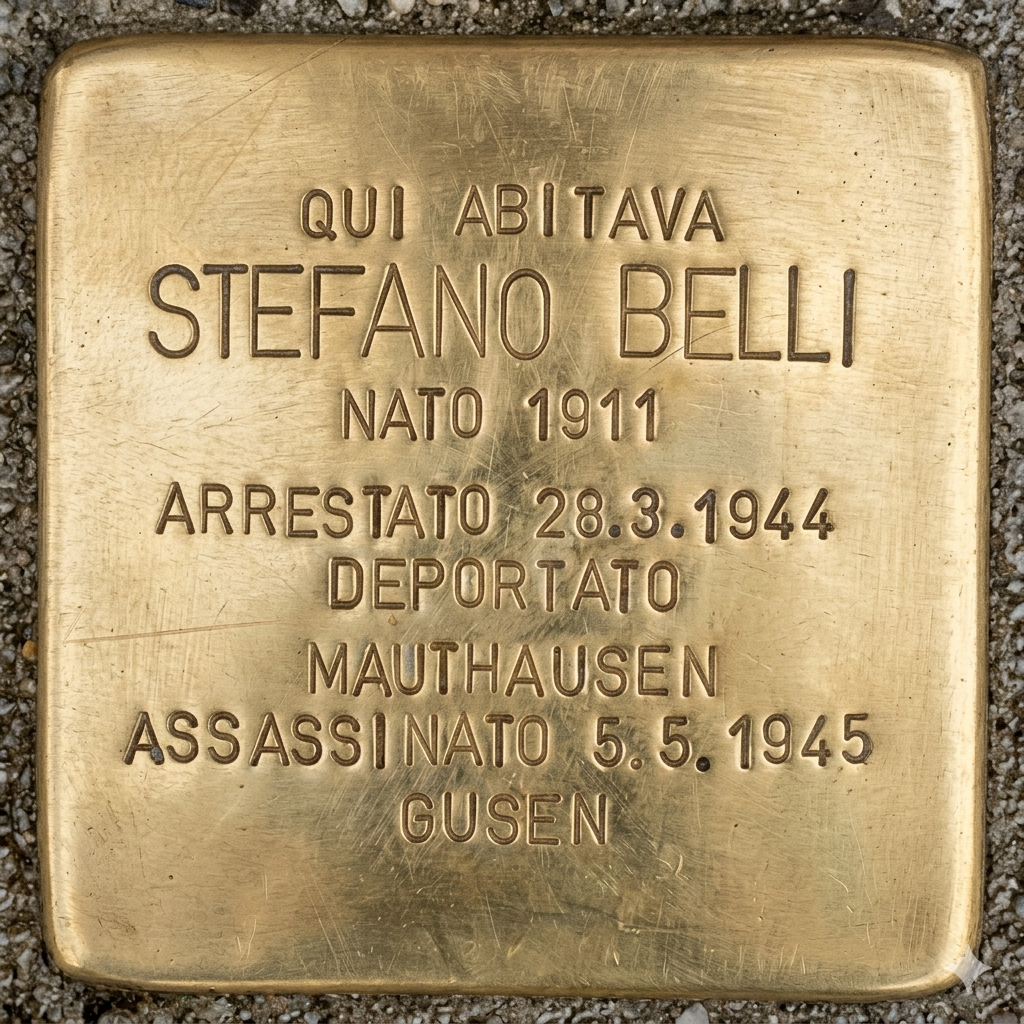
Stefano Belli
Stefano Belli was born on January 6, 1911, in Monza. He moved to Sesto San Giovanni, where he lived with his wife and daughter and worked at Falck Concordia as a thread adjuster. He was a member of the Falck National Liberation Committee (CLN) and was primarily dedicated to the propaganda and distribution of anti-Fascist leaflets.
He was arrested on March 27, 1944, following the strikes in which he had actively participated, and was imprisoned at San Vittore. After being transferred to the Umberto I barracks in Bergamo, he was loaded onto the wagons headed for the concentration camps on April 5. Indeed, on March 31, the Nazis in the prison department had compiled the "Strikertransport"—the list of all arrested strikers to be sent to Nazi concentration camps.
On April 8, 1944, he arrived at Mauthausen along with 611 other deportees. Mauthausen was a "Category III camp, for detainees held under public security measures, those under heavy suspicion, the incorrigible, habitual offenders, and 'asocials' unlikely to be re-educated"—in other words, a camp of no return, characterized by ruthless labor until total exhaustion. Stefano was registered with the number 61556 and classified as Schutzhaft (protective custody), meaning a political prisoner with an arrest warrant for security reasons.
On May 4, he was assigned to the subcamp of Gusen II, one of the largest satellite camps of Mauthausen. There, deportees dug underground tunnels where the Nazis moved factories to build the first Me 262 jet aircraft. This grueling labor caused such a high mortality rate that Gusen was nicknamed "the tomb of the Italians" by our deportees. The exact cause of Stefano's death is unknown, but it was recorded on May 5, 1945, the very day the camp was liberated by American troops.
He was arrested on March 27, 1944, following the strikes in which he had actively participated, and was imprisoned at San Vittore. After being transferred to the Umberto I barracks in Bergamo, he was loaded onto the wagons headed for the concentration camps on April 5. Indeed, on March 31, the Nazis in the prison department had compiled the "Strikertransport"—the list of all arrested strikers to be sent to Nazi concentration camps.
On April 8, 1944, he arrived at Mauthausen along with 611 other deportees. Mauthausen was a "Category III camp, for detainees held under public security measures, those under heavy suspicion, the incorrigible, habitual offenders, and 'asocials' unlikely to be re-educated"—in other words, a camp of no return, characterized by ruthless labor until total exhaustion. Stefano was registered with the number 61556 and classified as Schutzhaft (protective custody), meaning a political prisoner with an arrest warrant for security reasons.
On May 4, he was assigned to the subcamp of Gusen II, one of the largest satellite camps of Mauthausen. There, deportees dug underground tunnels where the Nazis moved factories to build the first Me 262 jet aircraft. This grueling labor caused such a high mortality rate that Gusen was nicknamed "the tomb of the Italians" by our deportees. The exact cause of Stefano's death is unknown, but it was recorded on May 5, 1945, the very day the camp was liberated by American troops.