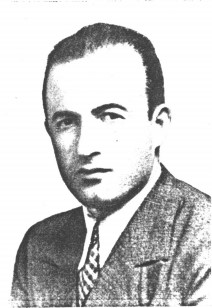
Silvio Mosca
Silvio was born in Sesto San Giovanni on August 11, 1912. While still a boy, he began working as an apprentice, becoming a specialized turner and fitter; thus, he was hired at the Falck Vittoria plant. In 1939, he married, and a daughter was born.
His sister, in an interview given to Giuseppe Valota, recounts: "Our entire family was anti-Fascist, starting from our father Pietro and even our grandfather. Silvio's anti-Fascist activity took place in the factory."
This was the reason for his arrest following the great strike of March '44: they captured him at 3:00 AM at his home on March 28. This was the arrest technique: at night to avoid causing unrest, claiming it was "just for a check." His sister searched for him the next morning at the San Fedele barracks in Milan, where "an official picked up a folder on which was written in large letters: Political deportees to be eliminated." Silvio was already at San Vittore, where she was unable to see him.
After a few days, a note arrived, picked up by a farmer on the railway tracks: Silvio had been sent to Bergamo. "I am well, do not worry about me. Take care of Elvira." She managed to see him at the Umberto I barracks while the convoy for Germany was being formed: "We could see the prisoners from the street and, in groups of 4 or five people, under supervision, they let us in to speak with our loved ones and bring food and linens, but for no more than ten minutes."
On April 6, the sealed wagons departed for Mauthausen, where Silvio became prisoner number 61701. He was immediately sent to work at Gusen, at the Steyr-Daimler-Puch war production factory.
The family heard nothing more of him. His sister recounts: "April 25 was a happy day, a great celebration, but the joy was short-lived. One day we went to see a former deportee from Cinisello; he told us he had seen them loading him up and taking him to the crematorium. We left that house feeling that our joy for the liberation was already over." Silvio had died on April 5, 1945, at the age of 33, from heart failure.
His sister, in an interview given to Giuseppe Valota, recounts: "Our entire family was anti-Fascist, starting from our father Pietro and even our grandfather. Silvio's anti-Fascist activity took place in the factory."
This was the reason for his arrest following the great strike of March '44: they captured him at 3:00 AM at his home on March 28. This was the arrest technique: at night to avoid causing unrest, claiming it was "just for a check." His sister searched for him the next morning at the San Fedele barracks in Milan, where "an official picked up a folder on which was written in large letters: Political deportees to be eliminated." Silvio was already at San Vittore, where she was unable to see him.
After a few days, a note arrived, picked up by a farmer on the railway tracks: Silvio had been sent to Bergamo. "I am well, do not worry about me. Take care of Elvira." She managed to see him at the Umberto I barracks while the convoy for Germany was being formed: "We could see the prisoners from the street and, in groups of 4 or five people, under supervision, they let us in to speak with our loved ones and bring food and linens, but for no more than ten minutes."
On April 6, the sealed wagons departed for Mauthausen, where Silvio became prisoner number 61701. He was immediately sent to work at Gusen, at the Steyr-Daimler-Puch war production factory.
The family heard nothing more of him. His sister recounts: "April 25 was a happy day, a great celebration, but the joy was short-lived. One day we went to see a former deportee from Cinisello; he told us he had seen them loading him up and taking him to the crematorium. We left that house feeling that our joy for the liberation was already over." Silvio had died on April 5, 1945, at the age of 33, from heart failure.