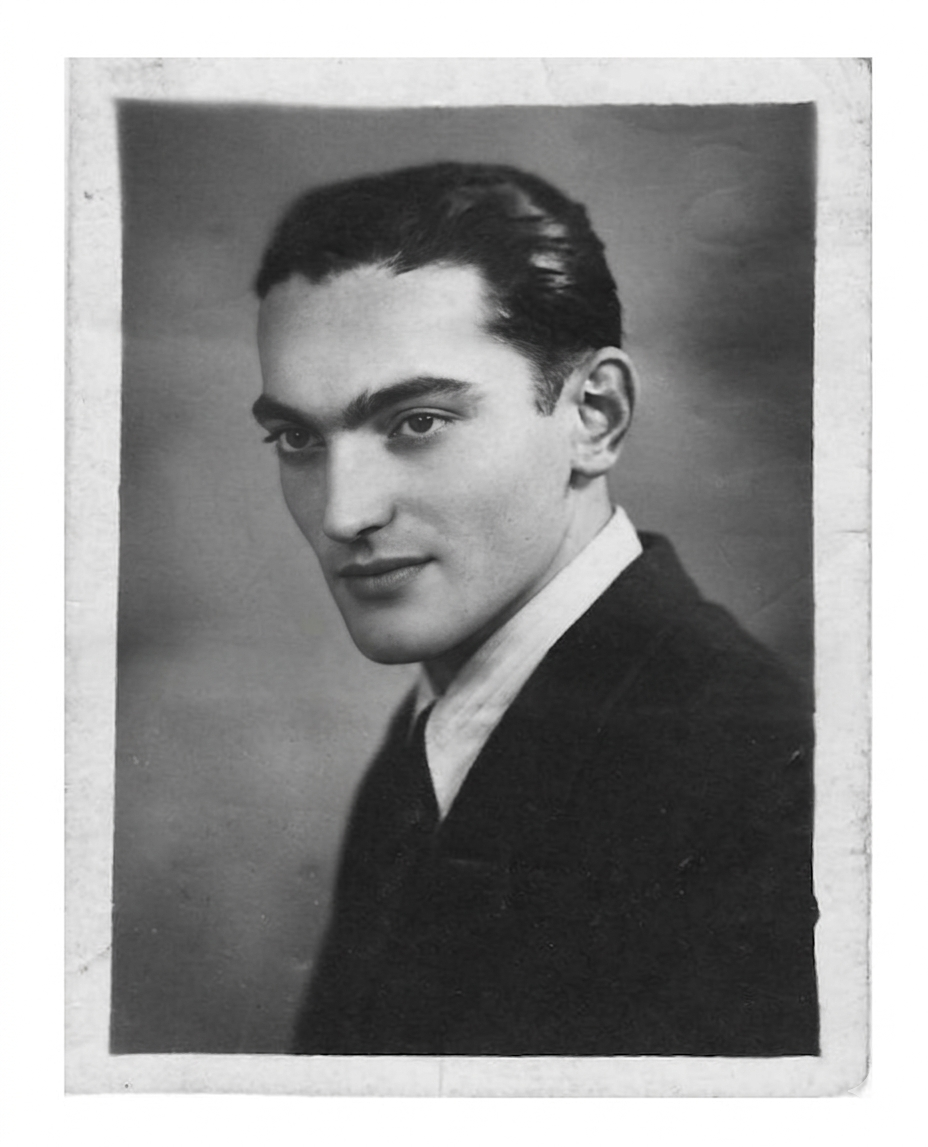
Severino Singia
Severino Giovanni was born in 1917 in Villa Cogozzo, in the Brescia area, and arrived in Sesto as a child; the second of four brothers, he attended elementary school here. He likely began working at a very young age, and by 1943 we find him at Breda (Section V) as a layout technician. At Breda, the process of "Fascistization" had been particularly difficult: "There are sections of Breda that are true Bolshevik groupings," the Police Chief of Milan stated. Severino was deeply involved in this profoundly anti-Fascist environment: as a communist, he was a member of the 108th Garibaldi Brigade and thus a participant in the week of strikes in 1944.
He was stopped in the street on Via Campari while returning from a funeral on March 7, the last day of the strike—either a targeted arrest or an unfortunate roundup of those who were not at work.
He passed through several places of detention: first for a month at San Vittore, then for three months at the Fossoli transit camp, followed by a few days at the Bolzano camp. Finally, he was loaded onto a sealed wagon for Mauthausen, where he arrived on August 7. His assignment to the inhuman subcamp of Gusen was a death sentence: Severino died on January 19, 1945, at only 27 years old, due to heart failure.
He was stopped in the street on Via Campari while returning from a funeral on March 7, the last day of the strike—either a targeted arrest or an unfortunate roundup of those who were not at work.
He passed through several places of detention: first for a month at San Vittore, then for three months at the Fossoli transit camp, followed by a few days at the Bolzano camp. Finally, he was loaded onto a sealed wagon for Mauthausen, where he arrived on August 7. His assignment to the inhuman subcamp of Gusen was a death sentence: Severino died on January 19, 1945, at only 27 years old, due to heart failure.