Photo not available
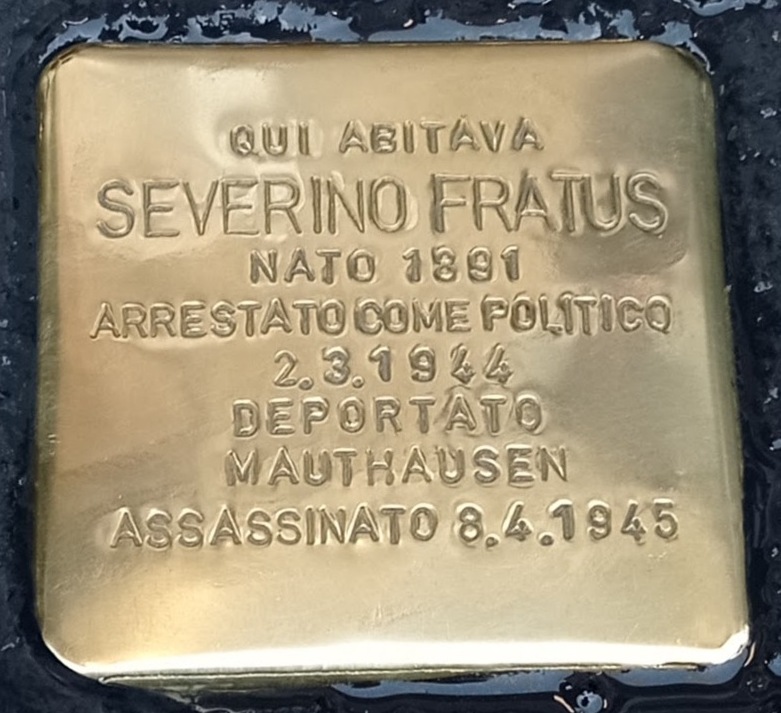
Severino Fratus
Born in Brescia in 1891, he moved to Sesto San Giovanni, drawn by the city's industrial development or perhaps preferring to change residence due to his socialist ideas.
Married to Angela Capelli, he was the father of three children. He worked in Breda (Section IV) as a toolmaker—a role that was very useful during the Resistance. A toolmaker, moving from one lathe to another, had the opportunity to maintain contact with all his comrades, pass on information, and convince the younger workers who had been born after the rise of Fascism and had not yet developed anti-Fascist ideals.
Severino belonged to the 108th SAP Brigade (Patriotic Action Squads), which organized sabotage against production destined for the Reich, as well as demonstrations and strikes, which became increasingly frequent from March 1943 and intensified particularly after the armistice of September 8. He was arrested on suspicion of being among the organizers of the March '44 strike week, which involved all of Northern Italy.
Severino was captured immediately after the start of the strike, on March 2, at his home by the SS security service. Immediately imprisoned in the San Fedele jail and later transferred to San Vittore, he was included in the Streikertransport (strikers' transport) compiled in the German wing of the prison.
Transferred from the prison to Bergamo on April 4, he departed the following day in a sealed wagon for the Mauthausen camp, arriving on April 8. Classified with a Red Triangle as Schutzhaft (detained for security reasons) under the number 61643, he was transferred on April 28 to the satellite camp of Gusen. There, he worked in the Messerschmitt factory producing submachine guns and assembling jet aircraft, certainly chosen based on his professional skills.
On March 13, 1945, he was taken back to Mauthausen to the infirmary, where he died on April 8.
Married to Angela Capelli, he was the father of three children. He worked in Breda (Section IV) as a toolmaker—a role that was very useful during the Resistance. A toolmaker, moving from one lathe to another, had the opportunity to maintain contact with all his comrades, pass on information, and convince the younger workers who had been born after the rise of Fascism and had not yet developed anti-Fascist ideals.
Severino belonged to the 108th SAP Brigade (Patriotic Action Squads), which organized sabotage against production destined for the Reich, as well as demonstrations and strikes, which became increasingly frequent from March 1943 and intensified particularly after the armistice of September 8. He was arrested on suspicion of being among the organizers of the March '44 strike week, which involved all of Northern Italy.
Severino was captured immediately after the start of the strike, on March 2, at his home by the SS security service. Immediately imprisoned in the San Fedele jail and later transferred to San Vittore, he was included in the Streikertransport (strikers' transport) compiled in the German wing of the prison.
Transferred from the prison to Bergamo on April 4, he departed the following day in a sealed wagon for the Mauthausen camp, arriving on April 8. Classified with a Red Triangle as Schutzhaft (detained for security reasons) under the number 61643, he was transferred on April 28 to the satellite camp of Gusen. There, he worked in the Messerschmitt factory producing submachine guns and assembling jet aircraft, certainly chosen based on his professional skills.
On March 13, 1945, he was taken back to Mauthausen to the infirmary, where he died on April 8.