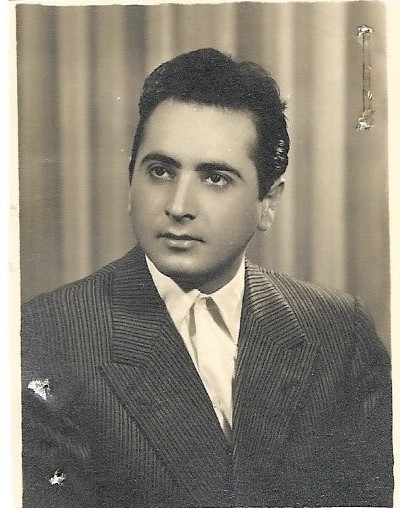
Renato Cardesi
Born in Florence on September 27, 1909, he moved to Sesto San Giovanni, where he worked as a metalworker at Breda (Section V, Aeronautics).
As a member of the factory's clandestine CLN (National Liberation Committee), he participated in the strikes of March 1944, despite the factory being occupied by Nazi military forces. The retaliation against the participants and suspected organizers of the strike was brutal. On the night of March 13, many Breda employees were arrested; among them was Cardesi, who was taken from his home, held overnight at the Sesto Police Headquarters, then moved to the San Fedele prison in Milan, and finally to San Vittore. Transferred to the German wing of the prison, he was included in the Streikertransport for deportation to Germany.
Transported to the Umberto I barracks in Bergamo where the convoy was being assembled, he departed on March 17 along with 566 comrades arrested throughout Northern Italy. On March 20, he entered Mauthausen, where he was assigned the number 58771, the Red Triangle, and classified as Schutzhaft: indefinite arrest.
After only a few months, his health was already undermined by labor and malnutrition. He was admitted to the camp infirmary, the dreaded Revier from which few emerged alive. A more cruel fate awaited him: on August 5, he was sent to Hartheim Castle for immediate entry into the gas chamber. The castle was officially defined as a "convalescent home"—a wicked piece of cover-up irony for the elimination of those who no longer had any hope of survival.
His wife and fourteen-year-old son heard nothing more of him until October 3, 1945, when his death was announced by the Assistance Center for Returnees from Germany.
As a member of the factory's clandestine CLN (National Liberation Committee), he participated in the strikes of March 1944, despite the factory being occupied by Nazi military forces. The retaliation against the participants and suspected organizers of the strike was brutal. On the night of March 13, many Breda employees were arrested; among them was Cardesi, who was taken from his home, held overnight at the Sesto Police Headquarters, then moved to the San Fedele prison in Milan, and finally to San Vittore. Transferred to the German wing of the prison, he was included in the Streikertransport for deportation to Germany.
Transported to the Umberto I barracks in Bergamo where the convoy was being assembled, he departed on March 17 along with 566 comrades arrested throughout Northern Italy. On March 20, he entered Mauthausen, where he was assigned the number 58771, the Red Triangle, and classified as Schutzhaft: indefinite arrest.
After only a few months, his health was already undermined by labor and malnutrition. He was admitted to the camp infirmary, the dreaded Revier from which few emerged alive. A more cruel fate awaited him: on August 5, he was sent to Hartheim Castle for immediate entry into the gas chamber. The castle was officially defined as a "convalescent home"—a wicked piece of cover-up irony for the elimination of those who no longer had any hope of survival.
His wife and fourteen-year-old son heard nothing more of him until October 3, 1945, when his death was announced by the Assistance Center for Returnees from Germany.