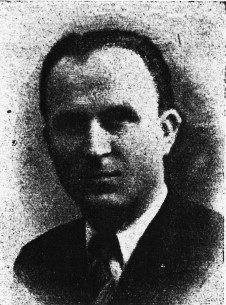
Primo Tortiroli
Primo Tortiroli was born in Casalbuttano, in the province of Cremona, on May 6, 1902. He arrived in Sesto San Giovanni in 1927, where he worked at Breda (Section I) as a turner with the qualification of acting foreman.
Married in 1930, he had two young children at the time of his arrest on September 10, 1943. Holding socialist ideas, he was arrested in one of the first raids carried out after the creation of the Republic of Salò, which targeted all individuals reported to the Police Headquarters for political views opposed to the Fascist regime.
He was arrested by the Carabinieri at the Bar Ravizza on Viale Marelli; after being held at the barracks in Sesto San Giovanni, he was sent to San Vittore for many months. In March of the following year, many detainees were sent first to the Fossoli transit camp and then to the Bergamo prison to be joined with the group of strikers destined for deportation to Germany.
He arrived at Mauthausen on April 8, 1944, registered with the number 61768 and classified as Schutzhaft, indicating political prisoners held under a security arrest warrant. On April 26, he was transferred to the Gusen subcamp and assigned to the Steyr-Daimler-Puch AG company, one of the major arms producers for the Reich. One of the goals of Nazi political deportation was to provide low-cost labor to support war production. The conditions of life, nutrition, and labor caused the death of 1,700 of the 3,000 Italians assigned to Gusen.
Nothing more was heard of Primo. His death, which occurred on April 19, 1945, due to heart failure and pneumonia after 19 months between prison and the concentration camp, would only be communicated to his family after the end of the war.
Married in 1930, he had two young children at the time of his arrest on September 10, 1943. Holding socialist ideas, he was arrested in one of the first raids carried out after the creation of the Republic of Salò, which targeted all individuals reported to the Police Headquarters for political views opposed to the Fascist regime.
He was arrested by the Carabinieri at the Bar Ravizza on Viale Marelli; after being held at the barracks in Sesto San Giovanni, he was sent to San Vittore for many months. In March of the following year, many detainees were sent first to the Fossoli transit camp and then to the Bergamo prison to be joined with the group of strikers destined for deportation to Germany.
He arrived at Mauthausen on April 8, 1944, registered with the number 61768 and classified as Schutzhaft, indicating political prisoners held under a security arrest warrant. On April 26, he was transferred to the Gusen subcamp and assigned to the Steyr-Daimler-Puch AG company, one of the major arms producers for the Reich. One of the goals of Nazi political deportation was to provide low-cost labor to support war production. The conditions of life, nutrition, and labor caused the death of 1,700 of the 3,000 Italians assigned to Gusen.
Nothing more was heard of Primo. His death, which occurred on April 19, 1945, due to heart failure and pneumonia after 19 months between prison and the concentration camp, would only be communicated to his family after the end of the war.