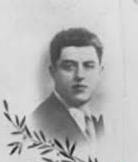
Pietro Marcante
He was born in the Vicenza area, in Zanè, on October 13, 1903, and had moved to Sesto, where he married and had a young daughter.
He worked at Falck Unione in the foundry as a mechanical grinder, and after his shift, he would meet with friends from the factory at the bar near the Dante Cinema—which no longer exists—on Via Falck. There were four friends: Biffi, Cardellini, Sistieri, and Marcante, and they all shared the same fate: death in the concentration camps.
In the factory, he collaborated with the 184th SAP Brigade (Patriotic Action Squads). He had already been tried in 1943 for "obstructing the course of work by arbitrarily suspending labor," according to the sentence that condemned him to imprisonment at San Vittore along with 49 other workers accused alongside him. Although they were eventually acquitted, strikes and sabotage intensified after the Armistice of September 8, 1943, and he was certainly under surveillance.
When the great strike of March 1944 broke out, those who had already exposed themselves were specifically targeted during the arrests. Pietro and his friends from the bar were all arrested on March 28, following a month of raids that had begun alongside the strike.
They were taken together to San Vittore, included in the Streikertransport (strikers' transport) on March 31, transferred to Bergamo, and deported to Mauthausen on April 8, 1944. Pietro was assigned the number 61681 and the Red Triangle, classified as Schutzhaft: detention for security reasons. At the end of April, he was transferred to Gusen, employed by Steyr-Daimler-Puch, which produced war material. In July, he was transferred to the Linz subcamp, where air-raid shelters were being built.
This less grueling work allowed him to remain alive until the liberation of the camp. However, although liberated, he arrived home in terrible condition, which caused his death a few days later, on June 26, 1945, due to cachexia (wasting syndrome). When it became known that all four friends had passed away, a commemorative picture of them was put up in the bar and remained hanging until the premises were sold.
He worked at Falck Unione in the foundry as a mechanical grinder, and after his shift, he would meet with friends from the factory at the bar near the Dante Cinema—which no longer exists—on Via Falck. There were four friends: Biffi, Cardellini, Sistieri, and Marcante, and they all shared the same fate: death in the concentration camps.
In the factory, he collaborated with the 184th SAP Brigade (Patriotic Action Squads). He had already been tried in 1943 for "obstructing the course of work by arbitrarily suspending labor," according to the sentence that condemned him to imprisonment at San Vittore along with 49 other workers accused alongside him. Although they were eventually acquitted, strikes and sabotage intensified after the Armistice of September 8, 1943, and he was certainly under surveillance.
When the great strike of March 1944 broke out, those who had already exposed themselves were specifically targeted during the arrests. Pietro and his friends from the bar were all arrested on March 28, following a month of raids that had begun alongside the strike.
They were taken together to San Vittore, included in the Streikertransport (strikers' transport) on March 31, transferred to Bergamo, and deported to Mauthausen on April 8, 1944. Pietro was assigned the number 61681 and the Red Triangle, classified as Schutzhaft: detention for security reasons. At the end of April, he was transferred to Gusen, employed by Steyr-Daimler-Puch, which produced war material. In July, he was transferred to the Linz subcamp, where air-raid shelters were being built.
This less grueling work allowed him to remain alive until the liberation of the camp. However, although liberated, he arrived home in terrible condition, which caused his death a few days later, on June 26, 1945, due to cachexia (wasting syndrome). When it became known that all four friends had passed away, a commemorative picture of them was put up in the bar and remained hanging until the premises were sold.