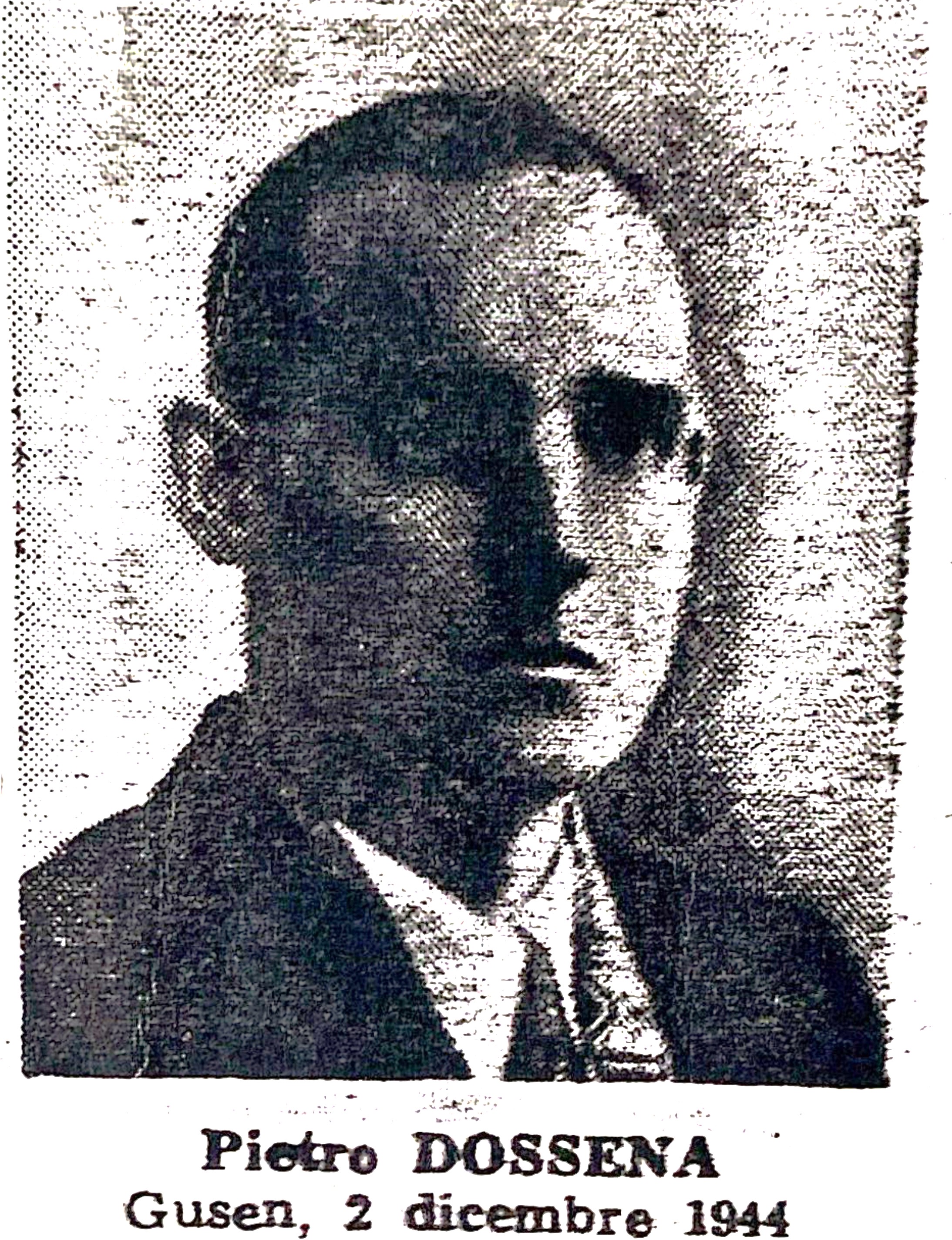
Pietro Dossena
Born on December 31, 1897, in Ombriano (Cremona).
Coming from an anti-Fascist family, he was persecuted from the very beginning of the regime with beatings and forced ingestion of castor oil, and later subjected to repeated searches. Perhaps to escape this situation, he went into exile in France, where he lived clandestinely for 22 months until 1932. He first worked at FIAT in Turin as a "furnace master," then moved to Breda Siderurgica (Section IV) in 1935.
In 1943, he was a registered member of the clandestine Communist Party; likewise, his three sons—including Luciano and Vittorio—joined partisan groups. Active in the 128th SAP Brigade, he procured weapons which he kept in a basement depot to be distributed to partisan units. Ernesto Labellottini recalls: "Whenever I brought him a weapon, he would hide it in the middle of a stack of large ingots."
Unfortunately, due to his record, he was being targeted. He was arrested immediately after the strikes of March 1944, at his home during the night, by a group of Fascists. After passing through the San Fedele and San Vittore prisons, he departed from Bergamo for Mauthausen just three days later, arriving on March 20. Following quarantine, he was sent to the Gusen subcamp, where he died on December 2, 1944, at 7:30 AM. According to the camp records, the cause was heart failure; he was 46 years old. His comrade Aldo Marostica testified to having witnessed his death.
Coming from an anti-Fascist family, he was persecuted from the very beginning of the regime with beatings and forced ingestion of castor oil, and later subjected to repeated searches. Perhaps to escape this situation, he went into exile in France, where he lived clandestinely for 22 months until 1932. He first worked at FIAT in Turin as a "furnace master," then moved to Breda Siderurgica (Section IV) in 1935.
In 1943, he was a registered member of the clandestine Communist Party; likewise, his three sons—including Luciano and Vittorio—joined partisan groups. Active in the 128th SAP Brigade, he procured weapons which he kept in a basement depot to be distributed to partisan units. Ernesto Labellottini recalls: "Whenever I brought him a weapon, he would hide it in the middle of a stack of large ingots."
Unfortunately, due to his record, he was being targeted. He was arrested immediately after the strikes of March 1944, at his home during the night, by a group of Fascists. After passing through the San Fedele and San Vittore prisons, he departed from Bergamo for Mauthausen just three days later, arriving on March 20. Following quarantine, he was sent to the Gusen subcamp, where he died on December 2, 1944, at 7:30 AM. According to the camp records, the cause was heart failure; he was 46 years old. His comrade Aldo Marostica testified to having witnessed his death.