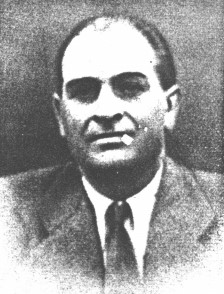
Palmiro Nanetti
Palmiro was born in 1896 in the province of Ferrara and, like many others, arrived in Sesto San Giovanni thanks to the city's growing steel industry, which drew a large workforce from all over Italy. He found work at Breda (Section II) as a drill press operator.
He participated in the great strikes of March 1944, which were followed by a massive wave of deportations—the Nazi occupiers' response to those who had dared to halt production for the Reich. Many of his Breda colleagues were with him, first at the San Fedele prison and then at San Vittore. On March 14, in the German wing, the Streikertransport (strikers' transport) was compiled; its list included the names of many citizens of Sesto. All the arrested men were then gathered at the Umberto I barracks in Bergamo, where a convoy of 566 men and 7 women was formed for deportation to Germany.
Arriving at Mauthausen on March 20, 1944, Palmiro was registered with the number 59013 and marked as Schutzhaft, Red Triangle, indicating those deported for security reasons for whom no return was intended. After only a few days, he was sent to Gusen, where during those months many deportees were assigned to the construction of tunnels carved into the rock to house war production in areas protected from Allied bombing. Many in this group shared this traumatic destination, earning Gusen the name "cemetery of the Italians."
Palmiro died after six months of deprivation, violence, and exhaustion on October 21, 1944, at the age of 48. The death certificate lists the cause as myocardial insufficiency and physical decay.
He participated in the great strikes of March 1944, which were followed by a massive wave of deportations—the Nazi occupiers' response to those who had dared to halt production for the Reich. Many of his Breda colleagues were with him, first at the San Fedele prison and then at San Vittore. On March 14, in the German wing, the Streikertransport (strikers' transport) was compiled; its list included the names of many citizens of Sesto. All the arrested men were then gathered at the Umberto I barracks in Bergamo, where a convoy of 566 men and 7 women was formed for deportation to Germany.
Arriving at Mauthausen on March 20, 1944, Palmiro was registered with the number 59013 and marked as Schutzhaft, Red Triangle, indicating those deported for security reasons for whom no return was intended. After only a few days, he was sent to Gusen, where during those months many deportees were assigned to the construction of tunnels carved into the rock to house war production in areas protected from Allied bombing. Many in this group shared this traumatic destination, earning Gusen the name "cemetery of the Italians."
Palmiro died after six months of deprivation, violence, and exhaustion on October 21, 1944, at the age of 48. The death certificate lists the cause as myocardial insufficiency and physical decay.