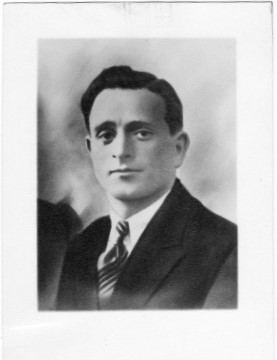
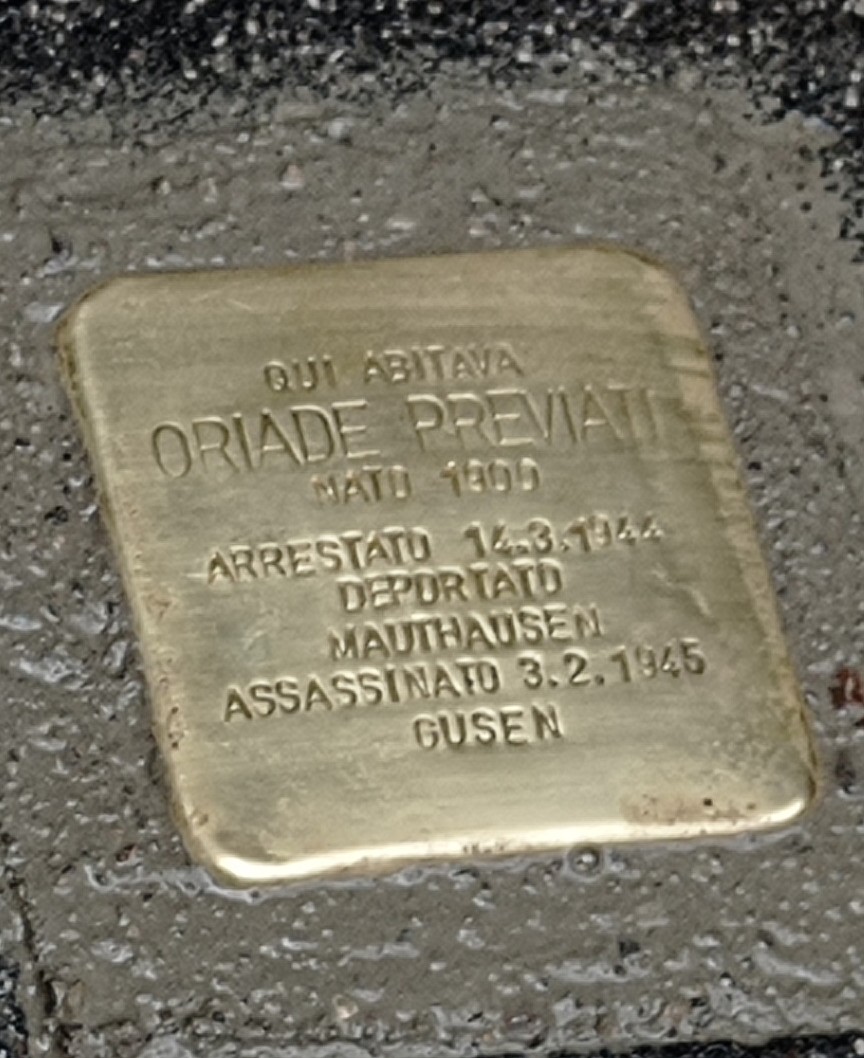
Oriade Previati
Oriade Previati was born on June 13, 1900, in a hamlet of Copparo, in the province of Ferrara. From a farming family, he—like many others—arrived in Sesto San Giovanni thanks to the development of the city's steel industry, which drew a large workforce from across Italy. All four of his children were born in Sesto San Giovanni.
In truth, he left his hometown in 1924 partly for political reasons: he had been a socialist since 1921, and life in the village had become dangerous following the rise of Fascism. He found work at Breda (Section IV, Steel) as a crane operator. He was a member of the factory's National Liberation Committee and a militant in the 108th Garibaldi SAP Brigade. He was kept under surveillance by the Fascists, who often detained him at the Casa del Fascio to intimidate him.
He was arrested at night, in his home, in the days immediately following the great strikes of March 1, 1944. Taken to the San Fedele prison and then to San Vittore, he was later transferred to the Umberto I barracks in Bergamo and deported.
Oriade arrived at Mauthausen on March 20, 1944, registered as a Schutzhaft (political prisoner) with number 59075 and the red triangle. After a few days, he was sent to Gusen; it is not known what specific task he was assigned to.
He died on February 3, 1945. The cause of death was listed as "cardiac weakness and organic decay": his body had been destroyed by the brutal labor of the camp until it was completely consumed.
The family, unaware of his fate and still hoping, was informed of his death by a surviving deportee who returned two months later. In 1999, a "Friendship Pact" was signed between the Municipality of Sesto San Giovanni and that of Langenstein, where the Gusen camp was located. Every year, ANED organizes a significant civic pilgrimage through both Gusen and Mauthausen to honor all the deported workers from the city of Sesto San Giovanni.
In truth, he left his hometown in 1924 partly for political reasons: he had been a socialist since 1921, and life in the village had become dangerous following the rise of Fascism. He found work at Breda (Section IV, Steel) as a crane operator. He was a member of the factory's National Liberation Committee and a militant in the 108th Garibaldi SAP Brigade. He was kept under surveillance by the Fascists, who often detained him at the Casa del Fascio to intimidate him.
He was arrested at night, in his home, in the days immediately following the great strikes of March 1, 1944. Taken to the San Fedele prison and then to San Vittore, he was later transferred to the Umberto I barracks in Bergamo and deported.
Oriade arrived at Mauthausen on March 20, 1944, registered as a Schutzhaft (political prisoner) with number 59075 and the red triangle. After a few days, he was sent to Gusen; it is not known what specific task he was assigned to.
He died on February 3, 1945. The cause of death was listed as "cardiac weakness and organic decay": his body had been destroyed by the brutal labor of the camp until it was completely consumed.
The family, unaware of his fate and still hoping, was informed of his death by a surviving deportee who returned two months later. In 1999, a "Friendship Pact" was signed between the Municipality of Sesto San Giovanni and that of Langenstein, where the Gusen camp was located. Every year, ANED organizes a significant civic pilgrimage through both Gusen and Mauthausen to honor all the deported workers from the city of Sesto San Giovanni.