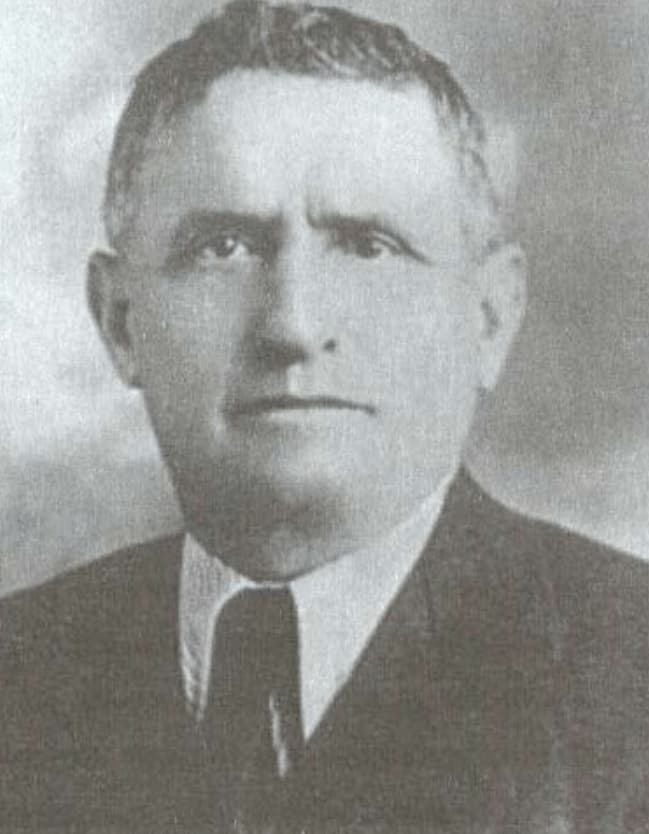
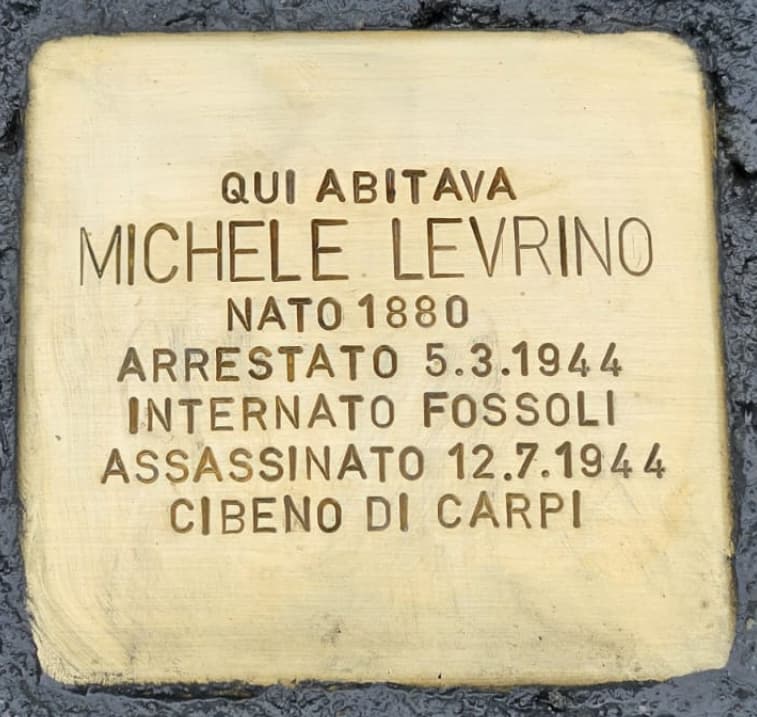
Michele Levrino
Michele was born in 1880 in Cumiana, near Turin. Fired as a form of retaliation by the Ferriere Piemontesi, he emigrated to Sesto San Giovanni in 1902, where his three children were born. A socialist from the very beginning, he had been arrested during the First World War and sent to the front as punishment. He later joined the clandestine Communist Party. Employed since 1919 as a laborer at Breda, he did not hide his pro-working-class ideas.
He participated in the factory strikes of 1943 and the great strike of March 1944, which brought the entire Northern Italy to a standstill under Nazi occupation. His political record immediately marked him as one of those to be punished for halting the Reich's production: arrested at his home on the morning of March 5, 1944, he was imprisoned at San Vittore until April 27, before being transferred to Fossoli from Platform 21 in Milan along with 223 other political prisoners.
After two more months, on the evening of July 11, 1944, SS non-commissioned officer Haage read the list of those destined for "transfer to the north." In reality, following the murder of Leopoldo Gasparotto, the elimination of prominent political figures was being finalized. The composition of the chosen prisoners reveals this: they included former officers and NCOs of the "Badoglian" resistance, Catholic anti-Fascists, Lombard activists from the Matteotti and Garibaldi Brigades, strikers from Northern Milan, and members of the Action Party. People of all ages were present—Michele Levrino was the eldest of them all.
Eugenio Jemina, who fortunately managed to escape the execution, testified:
"They made us sit in two parallel rows—one between the knees of the other—one composed of twelve people, including myself, and the other of thirteen. The first row of thirteen comrades had before them the German captain, the interpreter, and a soldier armed with a submachine gun, while behind us stood eight soldiers ready for the execution. As soon as the reading of the sentence was finished, I burst out in a cry: 'Why are you killing us?'. The cry was repeated by all those to be executed. [...] As I fled, I heard an infernal shooting that seemed never-ending."
When the bodies of the massacre victims were exhumed in 1945, the remains were identified by relatives or by the documents found on them: Michele Levrino was recognized by his son Giuseppe; he had a letter for his family, a flashlight, and a watch in his pocket.
He participated in the factory strikes of 1943 and the great strike of March 1944, which brought the entire Northern Italy to a standstill under Nazi occupation. His political record immediately marked him as one of those to be punished for halting the Reich's production: arrested at his home on the morning of March 5, 1944, he was imprisoned at San Vittore until April 27, before being transferred to Fossoli from Platform 21 in Milan along with 223 other political prisoners.
After two more months, on the evening of July 11, 1944, SS non-commissioned officer Haage read the list of those destined for "transfer to the north." In reality, following the murder of Leopoldo Gasparotto, the elimination of prominent political figures was being finalized. The composition of the chosen prisoners reveals this: they included former officers and NCOs of the "Badoglian" resistance, Catholic anti-Fascists, Lombard activists from the Matteotti and Garibaldi Brigades, strikers from Northern Milan, and members of the Action Party. People of all ages were present—Michele Levrino was the eldest of them all.
Eugenio Jemina, who fortunately managed to escape the execution, testified:
"They made us sit in two parallel rows—one between the knees of the other—one composed of twelve people, including myself, and the other of thirteen. The first row of thirteen comrades had before them the German captain, the interpreter, and a soldier armed with a submachine gun, while behind us stood eight soldiers ready for the execution. As soon as the reading of the sentence was finished, I burst out in a cry: 'Why are you killing us?'. The cry was repeated by all those to be executed. [...] As I fled, I heard an infernal shooting that seemed never-ending."
When the bodies of the massacre victims were exhumed in 1945, the remains were identified by relatives or by the documents found on them: Michele Levrino was recognized by his son Giuseppe; he had a letter for his family, a flashlight, and a watch in his pocket.