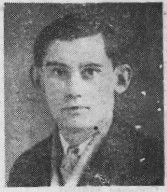
Mario Panna
Mario was born in Brembate, in the province of Bergamo, on May 12, 1911. Like many from that area, he moved to Sesto San Giovanni in 1931, where he was hired as a laborer at Breda (Section IV).
It is not known whether he held anti-Fascist ideals; his only "guilt" was perhaps having participated in the strike of March '44 and having had contact with the clandestine CLN (National Liberation Committee) in the factory. He was taken from his home during the night between March 13 and 14—as were all those arrested at Breda—following the usual procedures of the Fascist Police Headquarters: "don't worry, it's just for a check." Instead, he was sent to San Vittore, judged to be a dangerous opponent to be sent to Germany. We find his name on the list, compiled in the German wing of the prison, of detainees to be sent to the convoy forming in Bergamo: 566 men and 7 women crammed into sealed wagons heading toward Mauthausen. On March 20, he was registered with the number 61585 as Schutzhaft, Red Triangle—a prisoner held for security reasons under indefinite arrest.
He was initially utilized in the Linz subcamp, but on November 30, he was sent back to Mauthausen for the departure, on December 1, 1944, of 1,120 prisoners of all nationalities. These men, carefully chosen by trade, were sent to Auschwitz, likely to begin the dismantling of the subcamps closest to the advancing Soviet line.
After that, all traces of him were lost. We know that many from the group were forced into a march through the snow in January 1945 toward Buchenwald, while others returned to Mauthausen on a transport for which we possess the list, but his name is missing. It is possible that he died during the terrible march in the snow or while working outdoors in the freezing cold. A conventional death date of April 25, 1945, has been attributed to him.
His mother was among the organizers of the pilgrimages to discover the sites of the deportations from Sesto.
It is not known whether he held anti-Fascist ideals; his only "guilt" was perhaps having participated in the strike of March '44 and having had contact with the clandestine CLN (National Liberation Committee) in the factory. He was taken from his home during the night between March 13 and 14—as were all those arrested at Breda—following the usual procedures of the Fascist Police Headquarters: "don't worry, it's just for a check." Instead, he was sent to San Vittore, judged to be a dangerous opponent to be sent to Germany. We find his name on the list, compiled in the German wing of the prison, of detainees to be sent to the convoy forming in Bergamo: 566 men and 7 women crammed into sealed wagons heading toward Mauthausen. On March 20, he was registered with the number 61585 as Schutzhaft, Red Triangle—a prisoner held for security reasons under indefinite arrest.
He was initially utilized in the Linz subcamp, but on November 30, he was sent back to Mauthausen for the departure, on December 1, 1944, of 1,120 prisoners of all nationalities. These men, carefully chosen by trade, were sent to Auschwitz, likely to begin the dismantling of the subcamps closest to the advancing Soviet line.
After that, all traces of him were lost. We know that many from the group were forced into a march through the snow in January 1945 toward Buchenwald, while others returned to Mauthausen on a transport for which we possess the list, but his name is missing. It is possible that he died during the terrible march in the snow or while working outdoors in the freezing cold. A conventional death date of April 25, 1945, has been attributed to him.
His mother was among the organizers of the pilgrimages to discover the sites of the deportations from Sesto.