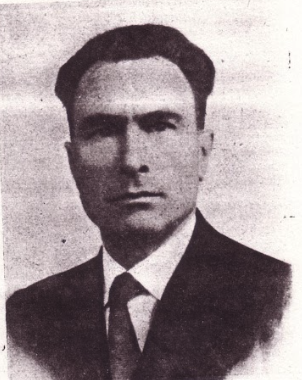
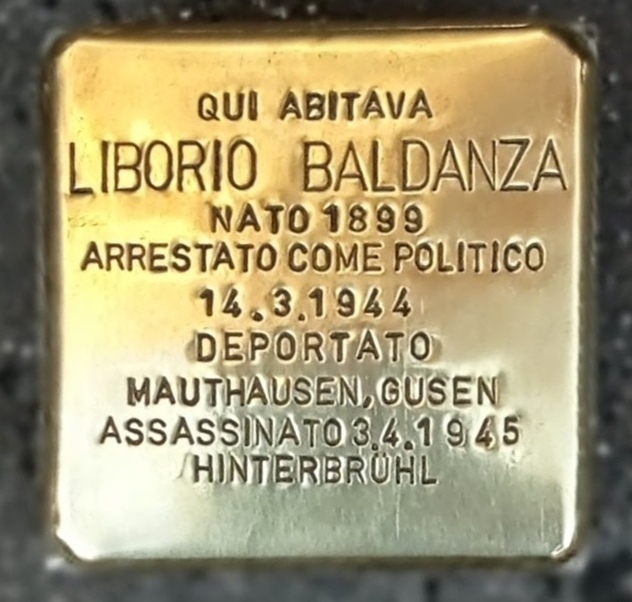
Liborio Baldanza
Liborio Baldanza was a protagonist of two decades of stubborn and irreducible resistance against the Fascist regime.
Born in 1899 in the Madonie mountains of Sicily, he developed a social conscience from a young age—first within his family and later in the factories—which led him to join the anti-fascist struggle at the very dawn of the dictatorship.
As a young man, he entered the Palermo Shipyards, where he deepened his commitment to the values of labor, equality, and civil rights. He joined the newly formed PCI (Italian Communist Party); by the time he emigrated to the North, he was already politically mature and immediately established contact with the leaders of the PCI and the local anti-fascist movement. He worked for several companies in Milan, and in 1925, he was hired at Ercole Marelli in Sesto San Giovanni. There, he fought both inside and outside the factory alongside friends and colleagues who shared his ideals. Due to his subversive activities, he was arrested in 1931, brought before the Special Tribunal, and served nine months in prison. Following his arrest, Marelli dismissed him.
Left without work, he went into clandestine exile to support the struggle from abroad. He collaborated with the leaders of the anti-fascist movement in France and Switzerland until two years later, in 1934, he was captured and handed back to the Italian Fascists. Despite being brutally interrogated by the police, he managed to convince his inquisitors of his innocence and was released. In 1935, he was hired at Breda. Between the workbenches, he spoke of politics and anti-fascism with the workers—especially the younger ones who, having been born under the dictatorship, were "politically illiterate" and needed training and preparation for the resistance.
He was among the organizers of the 1943 strikes, the first major act of rebellion against Nazi-Fascism, and later the strikes of March 1944. At the end of the strike, he was arrested at his home on the night of March 13 and deported on March 17 via the convoy departing from Bergamo. By March 20, he arrived at Mauthausen, later being transferred to Gusen, Hinterbrühl, Schwechat, and Floridsdorf. On April 1, 1945, the evacuation march began; he died during the journey on April 3.
In 1974, his life of struggle and self-sacrifice was honored with the Gold Medal.
Born in 1899 in the Madonie mountains of Sicily, he developed a social conscience from a young age—first within his family and later in the factories—which led him to join the anti-fascist struggle at the very dawn of the dictatorship.
As a young man, he entered the Palermo Shipyards, where he deepened his commitment to the values of labor, equality, and civil rights. He joined the newly formed PCI (Italian Communist Party); by the time he emigrated to the North, he was already politically mature and immediately established contact with the leaders of the PCI and the local anti-fascist movement. He worked for several companies in Milan, and in 1925, he was hired at Ercole Marelli in Sesto San Giovanni. There, he fought both inside and outside the factory alongside friends and colleagues who shared his ideals. Due to his subversive activities, he was arrested in 1931, brought before the Special Tribunal, and served nine months in prison. Following his arrest, Marelli dismissed him.
Left without work, he went into clandestine exile to support the struggle from abroad. He collaborated with the leaders of the anti-fascist movement in France and Switzerland until two years later, in 1934, he was captured and handed back to the Italian Fascists. Despite being brutally interrogated by the police, he managed to convince his inquisitors of his innocence and was released. In 1935, he was hired at Breda. Between the workbenches, he spoke of politics and anti-fascism with the workers—especially the younger ones who, having been born under the dictatorship, were "politically illiterate" and needed training and preparation for the resistance.
He was among the organizers of the 1943 strikes, the first major act of rebellion against Nazi-Fascism, and later the strikes of March 1944. At the end of the strike, he was arrested at his home on the night of March 13 and deported on March 17 via the convoy departing from Bergamo. By March 20, he arrived at Mauthausen, later being transferred to Gusen, Hinterbrühl, Schwechat, and Floridsdorf. On April 1, 1945, the evacuation march began; he died during the journey on April 3.
In 1974, his life of struggle and self-sacrifice was honored with the Gold Medal.