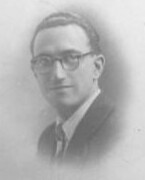
Guerra Aldo
Aldo was born in Switzerland to parents who had emigrated in search of fortune but who, unfortunately, died one after the other. Aldo and his sister were sent back to Italy to a boarding school, from which Aldo managed to escape at the age of 16, getting hired as an apprentice at Breda and bringing his sister with him.
After work, he attended evening classes in accounting, where he earned his diploma.
At Breda, he met Bruna, who had fled the Polesine region due to the continuous persecution of her family by the Fascists. Their ideological harmony was immediate—a friendship that soon turned into love, though their marriage was constantly postponed due to the economic hardships of the war. Finally, Aldo was hired as an accountant at AutoBianchi in Milan, and a small apartment became available: marriage was finally possible. On February 10, they were finally united and spent a few days of vacation together.
Upon their return—during the final days of February—a large general strike was being prepared. On March 1st, all activities came to a halt. Bruna waited for Aldo to return home, but he did not. The following morning at Bianchi, she was informed of his arrest right in front of the factory on the first day of the strike, along with ten others.
What followed mirrored the fate of all those deported in those days: the wives' frantic rush to San Vittore, only to discover that Aldo was in Fossoli. After the initial disorientation, a night train journey to Carpi followed. It was in vain: Bruna only managed to glimpse Aldo from a distance; they exchanged a smile. Then came the news that they had all been transferred to Bergamo, and there, finally, they managed to see each other for five minutes every day in a large room filled with people. She watched him depart at the station: only a smile and a wave of the hand before the sealed wagons were closed. She would never see Aldo again. For more than a year, there was no news, then the harsh truth: Mauthausen, Gusen, and finally death from septicemia.
After work, he attended evening classes in accounting, where he earned his diploma.
At Breda, he met Bruna, who had fled the Polesine region due to the continuous persecution of her family by the Fascists. Their ideological harmony was immediate—a friendship that soon turned into love, though their marriage was constantly postponed due to the economic hardships of the war. Finally, Aldo was hired as an accountant at AutoBianchi in Milan, and a small apartment became available: marriage was finally possible. On February 10, they were finally united and spent a few days of vacation together.
Upon their return—during the final days of February—a large general strike was being prepared. On March 1st, all activities came to a halt. Bruna waited for Aldo to return home, but he did not. The following morning at Bianchi, she was informed of his arrest right in front of the factory on the first day of the strike, along with ten others.
What followed mirrored the fate of all those deported in those days: the wives' frantic rush to San Vittore, only to discover that Aldo was in Fossoli. After the initial disorientation, a night train journey to Carpi followed. It was in vain: Bruna only managed to glimpse Aldo from a distance; they exchanged a smile. Then came the news that they had all been transferred to Bergamo, and there, finally, they managed to see each other for five minutes every day in a large room filled with people. She watched him depart at the station: only a smile and a wave of the hand before the sealed wagons were closed. She would never see Aldo again. For more than a year, there was no news, then the harsh truth: Mauthausen, Gusen, and finally death from septicemia.