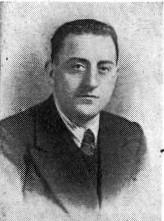
Giuseppe Sironi
Born in Sesto San Giovanni in 1914, he had always worked at Breda, and in his final years, he was in the Aeronautics Section (V) within the painting department as an expert nickel-plater. Like many of his comrades, despite the mild character attributed to him, he carried out anti-Fascist activities inside the company during the war—which had converted the plant to war production for the Reich—by distributing strike leaflets and clandestine newspapers. Weapons were also hidden at Breda to be distributed to the partisans.
After the general strike of March '44, Breda was targeted for its anti-war activities. A large number of Breda employees were arrested between March 13 and 14 and, like him, taken to the San Fedele prison and then to San Vittore. On March 14, in the German wing, the Streikertransport (strikers' transport) was compiled, containing the names of many residents of Sesto. His wife, whom he had married less than a year earlier, would never see him again: immediately transferred to Bergamo for departure to Germany, 563 detainees and 7 women arrested with them were loaded onto sealed wagons on March 17.
Arriving at Mauthausen on March 20, Giuseppe was already in the Gusen subcamp four days later, working for the Steyr company, where parts for the Me262 jet fighters were produced. Deportees assigned to war production worked 11–12 hours a day, seven days a week without a break, and received approximately 771 calories of food: gray bread and turnip soup. Despite these living conditions, Giuseppe managed to endure for nearly a year: he died in Gusen on April 7, 1945. His wife only received notification of his death on November 8.
After the general strike of March '44, Breda was targeted for its anti-war activities. A large number of Breda employees were arrested between March 13 and 14 and, like him, taken to the San Fedele prison and then to San Vittore. On March 14, in the German wing, the Streikertransport (strikers' transport) was compiled, containing the names of many residents of Sesto. His wife, whom he had married less than a year earlier, would never see him again: immediately transferred to Bergamo for departure to Germany, 563 detainees and 7 women arrested with them were loaded onto sealed wagons on March 17.
Arriving at Mauthausen on March 20, Giuseppe was already in the Gusen subcamp four days later, working for the Steyr company, where parts for the Me262 jet fighters were produced. Deportees assigned to war production worked 11–12 hours a day, seven days a week without a break, and received approximately 771 calories of food: gray bread and turnip soup. Despite these living conditions, Giuseppe managed to endure for nearly a year: he died in Gusen on April 7, 1945. His wife only received notification of his death on November 8.