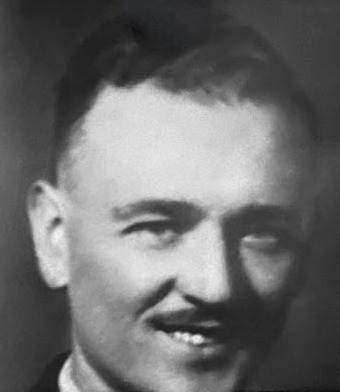
Giuseppe Pasquini
He was born in Bergamo and, drawn like many others from that area, had sought work in Sesto San Giovanni, where rapidly developing industries were in need of labor. Hired at Breda (Section V, Aeronautics), he eventually earned the qualification of mechanical fitter, a highly valued specialized job. He soon joined the CLN (National Liberation Committee) group at Breda, in contact with the 108th Garibaldi Brigade. He did not keep his anti-Fascist ideals hidden; his very work led him to spread them among his comrades during the tuning operations of machine tools. Consequently, he participated actively in the strikes and protest actions of 1943–44, and all of this led to his arrest by the Gestapo on June 29, 1944.
He remained at San Vittore until September 7, was then sent to the Italian transit camp of Bolzano, and from there, after a month, was sent to Dachau, where he was registered with the number 113478. But his journey had not ended: groups of deportees were often transferred to other camps where labor was required. Another 400-kilometer journey in sealed wagons took him to Buchenwald, where, after quarantine, he was definitively assigned to Bad Gandersheim, one of Buchenwald's 130 subcamps, employed in the production of aircraft components for Heinkel.
On April 4, 1945, the evacuation of the camps around Buchenwald began, but before starting the "death march," the SS shot 40 prisoners who were too weak to face it. Giuseppe was among them. He was buried near the camp.
He remained at San Vittore until September 7, was then sent to the Italian transit camp of Bolzano, and from there, after a month, was sent to Dachau, where he was registered with the number 113478. But his journey had not ended: groups of deportees were often transferred to other camps where labor was required. Another 400-kilometer journey in sealed wagons took him to Buchenwald, where, after quarantine, he was definitively assigned to Bad Gandersheim, one of Buchenwald's 130 subcamps, employed in the production of aircraft components for Heinkel.
On April 4, 1945, the evacuation of the camps around Buchenwald began, but before starting the "death march," the SS shot 40 prisoners who were too weak to face it. Giuseppe was among them. He was buried near the camp.