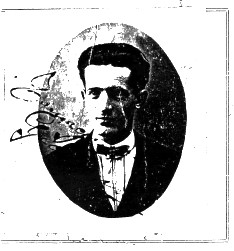
Giovanni Tamagni
Giovanni was born in Viadana, in the province of Mantua. He arrived in Sesto in 1941 with his wife, Adalgisa, and their two children, and was hired at Breda as an electrician. According to the testimony of his son, who was a 17-year-old worker at the time of the arrest, the reasons for the move were as follows: "In our village, my father installed electrical systems in houses, and at a certain point, he heard they were starting to draft people of his age group. Furthermore, he was Catholic, and in those parts, Catholics were not well-regarded by the Fascists."
Dante Tamagni describes him as a quiet man who tried not to draw attention to himself, "yet he joined the strike, and it seems they found an anti-Fascist leaflet in his pocket; so perhaps he said nothing at home, but outside he was distributing something. I know someone reported him, and I remember him saying that if they went to the factory to seize people, he would climb onto a crane, drive it away, and save himself."
Unfortunately, he was instead arrested in front of the factory on the second day of the strike, March 2, '44. He was taken to San Vittore, but his family knew nothing of it. From San Vittore, the first arrested strikers were transported in covered trucks to Platform 21 at dawn on March 4, only two days after the arrest. Giovanni managed to throw a note from the train taking him to Mauthausen to notify his family. He was registered on March 13, after a week-long stop in Innsbruck, with the number 56729, classified as Schutz—deported under indefinite protective custody.
Transferred to the horrific Gusen subcamp in December, he survived until January 14, 1945, dying of circulatory collapse and dropsy. The family learned of his fate from comrades who had seen him.
Dante Tamagni describes him as a quiet man who tried not to draw attention to himself, "yet he joined the strike, and it seems they found an anti-Fascist leaflet in his pocket; so perhaps he said nothing at home, but outside he was distributing something. I know someone reported him, and I remember him saying that if they went to the factory to seize people, he would climb onto a crane, drive it away, and save himself."
Unfortunately, he was instead arrested in front of the factory on the second day of the strike, March 2, '44. He was taken to San Vittore, but his family knew nothing of it. From San Vittore, the first arrested strikers were transported in covered trucks to Platform 21 at dawn on March 4, only two days after the arrest. Giovanni managed to throw a note from the train taking him to Mauthausen to notify his family. He was registered on March 13, after a week-long stop in Innsbruck, with the number 56729, classified as Schutz—deported under indefinite protective custody.
Transferred to the horrific Gusen subcamp in December, he survived until January 14, 1945, dying of circulatory collapse and dropsy. The family learned of his fate from comrades who had seen him.