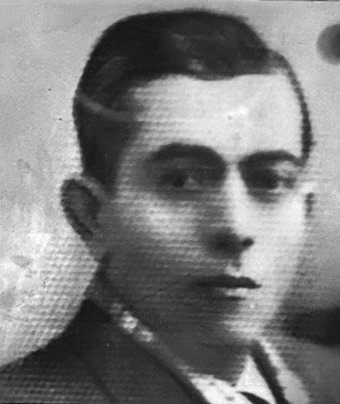
Giovanni De Marco
Giovanni was born in Terlizzi, in the province of Bari, on September 8, 1906. After moving to Sesto, he worked as a cutter at Falck Vittoria.
He was arrested during the raids that followed the great strike of March 1944: on the night of March 28, he was taken away by men in civilian clothes and imprisoned first in the San Fedele prison and then at San Vittore. On March 31, he was included in the Streikertransport (strikers' transport) compiled in the German wing of San Vittore. Sent to the Umberto I barracks in Bergamo, he awaited the formation of the convoy that departed for Germany on April 6. This was the fourth convoy carrying those who had joined the March '44 strike, which had halted production across all factories in Northern Italy. The number of strikers and anti-Fascist organizers arrested in response to the largest general mobilization in Nazi-occupied Europe exceeded 3,000 deportees between March and June.
Giovanni arrived at Mauthausen on March 20 and was registered as Schutzhaft, Red Triangle with the number 58768—the classification for those arrested for security reasons and destined for indefinite imprisonment. He was sent to the terrible subcamp of Gusen, where half of the 68,000 deportees of all nationalities perished. Giovanni was among them: he died on November 26. With an average survival rate of nine months in that camp, he had managed to endure the hunger, the cold, the backbreaking labor, and the beatings for only eight months.
He was only 37 years old. He shared the fate of 96 citizens from Sesto who died in that concentration camp.
He was arrested during the raids that followed the great strike of March 1944: on the night of March 28, he was taken away by men in civilian clothes and imprisoned first in the San Fedele prison and then at San Vittore. On March 31, he was included in the Streikertransport (strikers' transport) compiled in the German wing of San Vittore. Sent to the Umberto I barracks in Bergamo, he awaited the formation of the convoy that departed for Germany on April 6. This was the fourth convoy carrying those who had joined the March '44 strike, which had halted production across all factories in Northern Italy. The number of strikers and anti-Fascist organizers arrested in response to the largest general mobilization in Nazi-occupied Europe exceeded 3,000 deportees between March and June.
Giovanni arrived at Mauthausen on March 20 and was registered as Schutzhaft, Red Triangle with the number 58768—the classification for those arrested for security reasons and destined for indefinite imprisonment. He was sent to the terrible subcamp of Gusen, where half of the 68,000 deportees of all nationalities perished. Giovanni was among them: he died on November 26. With an average survival rate of nine months in that camp, he had managed to endure the hunger, the cold, the backbreaking labor, and the beatings for only eight months.
He was only 37 years old. He shared the fate of 96 citizens from Sesto who died in that concentration camp.