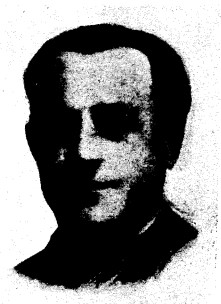
Giovanni Cassani
Born in Viggiù on June 7, 1906, he worked as a chemical researcher at Falck Unione. He lived in Sesto with a sister and a brother. From his sister's testimony, preserved in the ANED section, we read:
"I knew nothing of his activities; he had never spoken to me about them. I only saw that he was agitated. The last Sunday, before being arrested on Monday, he came up to visit mom and dad here in Viggiù. While he was here, a dear friend of his who was going to Switzerland told him, 'Giovanni, don't go back to Sesto,' and he replied, 'If I don't go, they will come up here to take my parents.'"
He was arrested at his home by armed Fascist militia on March 28, 1944. After passing through San Fedele and San Vittore prisons, he was transferred to Bergamo with the Streikertransport of March 31, along with 44 other comrades from Falck. After only a few days of waiting at the Umberto I barracks, where he was visited by his sister, the convoy departed for Mauthausen, where he was registered on April 8 with the number 61599.
After quarantine, he was transferred to Gusen and worked in the Messerschmitt factory, where submachine guns and jet aircraft were manufactured. The possibility of working indoors—despite the harassment, the freezing living conditions, and the lack of food—allowed him to survive for nearly a year.
In the end, his body gave way on March 1, 1945. His brother and sister, who had received no news of him, searched through all official channels. Upon asking survivors for information, they learned this harsh reality from a Falck colleague, Marco Locatelli:
"Your brother Giovanni's legs were swollen; he couldn't take any more. It must have been April 1st or 2nd, 1945. I told him not to go to the infirmary, otherwise it would be worse. I heard nothing more from there. Then, three days later, I heard from someone that Giovanni had died."
The death register compiled at the camp reads: "circulatory collapse and dropsy."
"I knew nothing of his activities; he had never spoken to me about them. I only saw that he was agitated. The last Sunday, before being arrested on Monday, he came up to visit mom and dad here in Viggiù. While he was here, a dear friend of his who was going to Switzerland told him, 'Giovanni, don't go back to Sesto,' and he replied, 'If I don't go, they will come up here to take my parents.'"
He was arrested at his home by armed Fascist militia on March 28, 1944. After passing through San Fedele and San Vittore prisons, he was transferred to Bergamo with the Streikertransport of March 31, along with 44 other comrades from Falck. After only a few days of waiting at the Umberto I barracks, where he was visited by his sister, the convoy departed for Mauthausen, where he was registered on April 8 with the number 61599.
After quarantine, he was transferred to Gusen and worked in the Messerschmitt factory, where submachine guns and jet aircraft were manufactured. The possibility of working indoors—despite the harassment, the freezing living conditions, and the lack of food—allowed him to survive for nearly a year.
In the end, his body gave way on March 1, 1945. His brother and sister, who had received no news of him, searched through all official channels. Upon asking survivors for information, they learned this harsh reality from a Falck colleague, Marco Locatelli:
"Your brother Giovanni's legs were swollen; he couldn't take any more. It must have been April 1st or 2nd, 1945. I told him not to go to the infirmary, otherwise it would be worse. I heard nothing more from there. Then, three days later, I heard from someone that Giovanni had died."
The death register compiled at the camp reads: "circulatory collapse and dropsy."