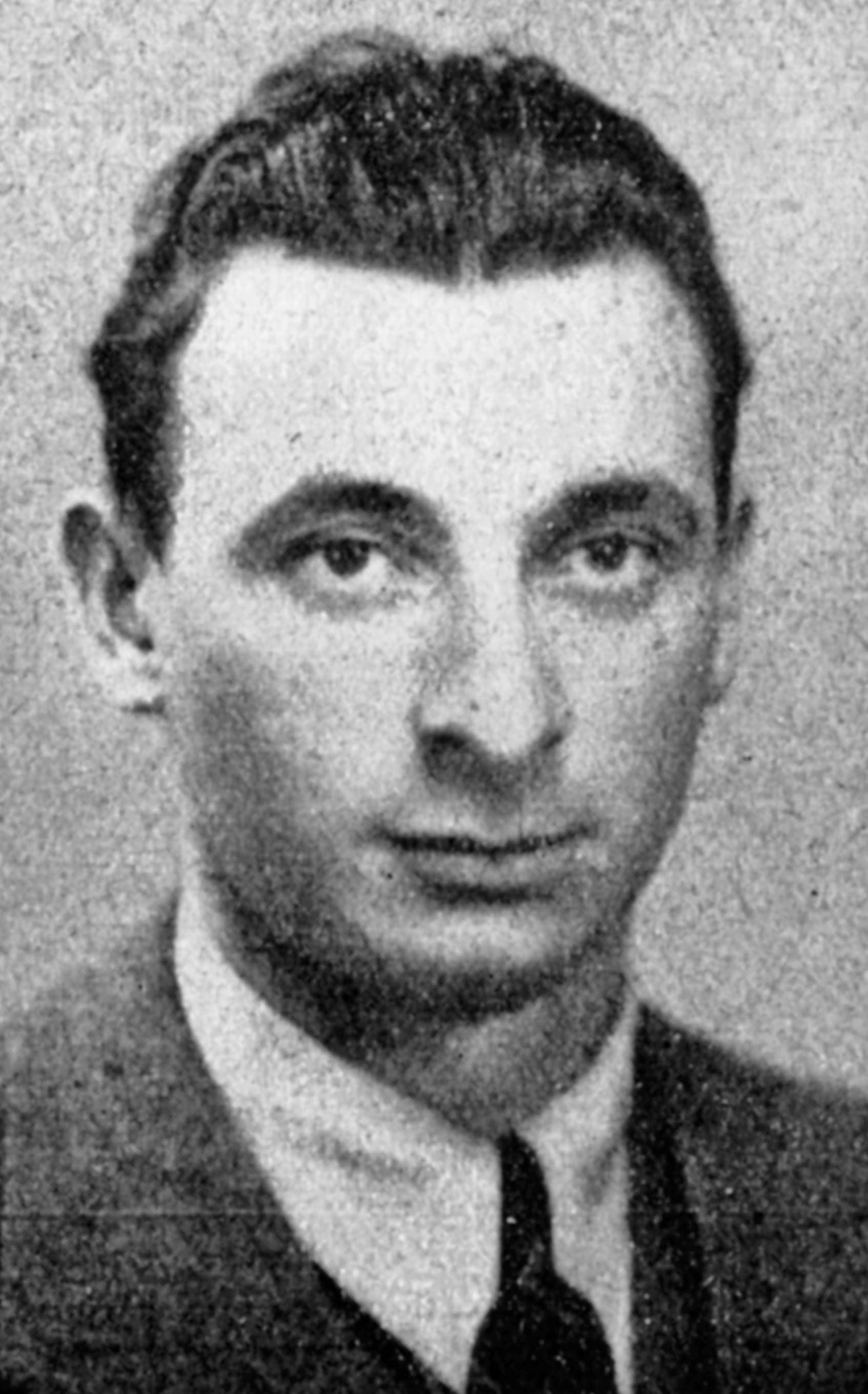
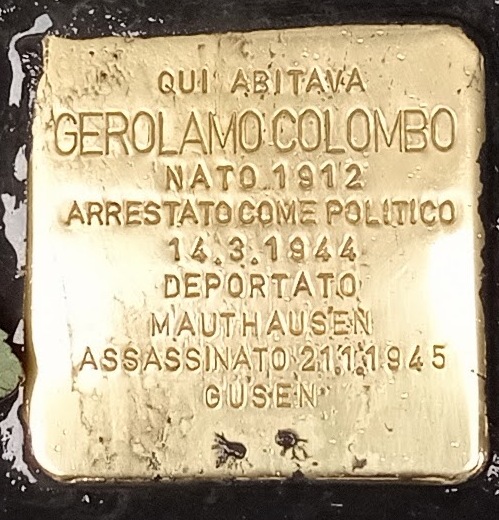
Gerolamo Colombo
Gerolamo was born in Monza on September 21, 1912, but soon moved to Sesto San Giovanni, where he married in 1939. In the city, he frequented a group of friends at the Bar Sport: "They were all socialists; back then, calling oneself a communist was a bit difficult, and he never spoke to me about politics," recounts his widow, whose interview is preserved at the Sesto ANED section.
He worked as a painter at Breda (Section V), where he was part of the committee for sabotaging machinery and materials destined for the Reich. He was arrested on March 14, 1944, at 2:20 AM. Out on the street, there was already a bus filled with people who had been taken from their homes, yet the officers' words were ironically reassuring: "We need to take him with us now, because tomorrow morning he’ll be going to work, and we need him now."
Instead, he was taken to the San Fedele prison in Milan, then to San Vittore, and immediately after sent to Bergamo, where a convoy for Germany was being formed with strikers from across Northern Italy. This was the Reich's response to the "crime" of striking. His wife barely managed to see him as he marched in line toward the station with 566 comrades on the morning of March 17, hearing him shout from a distance: "I entrust Luigi to you, I entrust little Luigino to you!"
At Mauthausen, he was assigned the number 58806 and the Red Triangle, marking him as Schutzhaft—destined for indefinite arrest. Transferred after a few days to Gusen, nicknamed "the cemetery of the Italians" due to the high number of deaths, he died of physical exhaustion on January 21, 1945, at only 33 years old.
At the end of 1945, his widow learned the truth from Aldo Marostica, who had worked alongside him excavating the tunnels of St. Georgen and confirmed that he had seen him die.
He worked as a painter at Breda (Section V), where he was part of the committee for sabotaging machinery and materials destined for the Reich. He was arrested on March 14, 1944, at 2:20 AM. Out on the street, there was already a bus filled with people who had been taken from their homes, yet the officers' words were ironically reassuring: "We need to take him with us now, because tomorrow morning he’ll be going to work, and we need him now."
Instead, he was taken to the San Fedele prison in Milan, then to San Vittore, and immediately after sent to Bergamo, where a convoy for Germany was being formed with strikers from across Northern Italy. This was the Reich's response to the "crime" of striking. His wife barely managed to see him as he marched in line toward the station with 566 comrades on the morning of March 17, hearing him shout from a distance: "I entrust Luigi to you, I entrust little Luigino to you!"
At Mauthausen, he was assigned the number 58806 and the Red Triangle, marking him as Schutzhaft—destined for indefinite arrest. Transferred after a few days to Gusen, nicknamed "the cemetery of the Italians" due to the high number of deaths, he died of physical exhaustion on January 21, 1945, at only 33 years old.
At the end of 1945, his widow learned the truth from Aldo Marostica, who had worked alongside him excavating the tunnels of St. Georgen and confirmed that he had seen him die.