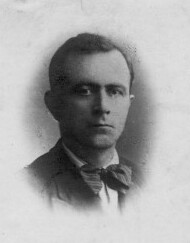
Filippo Penati
Born in Vimercate on April 23, 1894, he moved to Sesto in 1916. He was a bronze medal recipient for military valor in the First World War, though he never boasted of this honor. He was hired at Breda (Section IV) as an electrician; a widower with one son, he remarried in Sesto in 1939. An anti-Fascist from the very beginning, he frequented the Bar Carducci, which housed a section of the PCI (Italian Communist Party); he always had copies of L'Unità in his pocket to distribute.
In an interview with his son Giuseppe, the fights he never backed down from when Fascist squads provoked him and the many harassments he suffered are remembered. In October '43, they wanted to burn down his house; in January '44, they shot at his son Giuseppe, who was also involved in the Resistance, without wounding him. He possessed great courage and initiative; "his tendencies, more anarchist than communist, never stopped him," his son says. Both actively participated in the strikes of March '44. He warned his son to sleep away from home, but he stayed: he was arrested, along with his Breda comrades, on the night between March 13 and 14. Taken to Milan to the San Fedele and San Vittore prisons and included on the list of strikers to be sent to Germany, he departed from Bergamo with the convoy of March 17 and was registered at Mauthausen with the number 59046, Red Triangle.
He was immediately transferred to Gusen, then in April to Schwechat, near Vienna, where fighter planes were assembled. The camp was evacuated after an air raid, and the deportees were sent to Schlier, where weapons were produced in brewery cellars. On February 10, '45, he was transferred back to Gusen, but on March 1st, he had to be admitted to the Revier of the central camp: an infirmary from which one rarely emerged alive. Filippo died on March 27, 1945, of pneumonia. The family tried in every way to obtain information, without success. Finally, "one day my mother heard of the return of someone from Cinisello who might have been with Filippo; I went to him immediately and found him in poor shape. He said my father had ended up in the infirmary and tried to make us understand that no one came out of there alive, but I didn't want to accept the tragic reality; above all, I didn't want to tell my mother." The official communication from the Red Cross arrived in 1947.
In an interview with his son Giuseppe, the fights he never backed down from when Fascist squads provoked him and the many harassments he suffered are remembered. In October '43, they wanted to burn down his house; in January '44, they shot at his son Giuseppe, who was also involved in the Resistance, without wounding him. He possessed great courage and initiative; "his tendencies, more anarchist than communist, never stopped him," his son says. Both actively participated in the strikes of March '44. He warned his son to sleep away from home, but he stayed: he was arrested, along with his Breda comrades, on the night between March 13 and 14. Taken to Milan to the San Fedele and San Vittore prisons and included on the list of strikers to be sent to Germany, he departed from Bergamo with the convoy of March 17 and was registered at Mauthausen with the number 59046, Red Triangle.
He was immediately transferred to Gusen, then in April to Schwechat, near Vienna, where fighter planes were assembled. The camp was evacuated after an air raid, and the deportees were sent to Schlier, where weapons were produced in brewery cellars. On February 10, '45, he was transferred back to Gusen, but on March 1st, he had to be admitted to the Revier of the central camp: an infirmary from which one rarely emerged alive. Filippo died on March 27, 1945, of pneumonia. The family tried in every way to obtain information, without success. Finally, "one day my mother heard of the return of someone from Cinisello who might have been with Filippo; I went to him immediately and found him in poor shape. He said my father had ended up in the infirmary and tried to make us understand that no one came out of there alive, but I didn't want to accept the tragic reality; above all, I didn't want to tell my mother." The official communication from the Red Cross arrived in 1947.