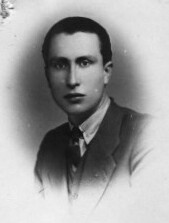
Ettore Paesani
Born on February 11, 1922, in Ascoli Piceno, he arrived in Sesto in 1926 with his parents: his father was drawn by the demand for labor created by the city's industrial development and had indeed found work at Breda.
Everyone in the family was a committed anti-Fascist; his father was a member of the clandestine Communist Party after having been an anarchist.
Ettore joined Breda (Section V) as a tinsmith and later an installer. After September 8, Breda Aeronautics had a significant number of workers and managers who opposed Fascism, along with a network of comrades, organized clandestinely, who provided weapons to the partisans and the Gappisti.
Ettore came into contact with the workers' Resistance and, for this reason, was caught up in the arrests that targeted Breda workers on the night between March 13 and 14, 1944: it was the Nazi-Fascist response to those who had dared to halt production for the Reich.
The following morning, his mother and sister began an anguished and fruitless search. The next day, they were given a note that Ettore had managed to throw from the truck taking prisoners from San Vittore to Bergamo, specifically at the Buozzi railway overpass near their home. The note read: "Whoever finds this note, please be so kind as to deliver it to Via Bergomi 8, Sesto San Giovanni. Dear parents, do not worry about me, I am well, I am waiting to leave for an unknown destination. Greetings to all of you, big kisses from your son." Ettore departed from Bergamo on March 17, just three days after his arrest. At Mauthausen, he became prisoner number 59027, Red Triangle; he was immediately transferred to Gusen II, where the construction of tunnels carved into the rock to protect war production factories had begun in March. The work in the tunnels was horrific; every day there were injured and dead carried out by their comrades at the end of the shift.
Ettore had the strong constitution of a young man and endured for eight months: he died on November 3. The family only learned the truth from Mario Taccioli, who had survived.
Everyone in the family was a committed anti-Fascist; his father was a member of the clandestine Communist Party after having been an anarchist.
Ettore joined Breda (Section V) as a tinsmith and later an installer. After September 8, Breda Aeronautics had a significant number of workers and managers who opposed Fascism, along with a network of comrades, organized clandestinely, who provided weapons to the partisans and the Gappisti.
Ettore came into contact with the workers' Resistance and, for this reason, was caught up in the arrests that targeted Breda workers on the night between March 13 and 14, 1944: it was the Nazi-Fascist response to those who had dared to halt production for the Reich.
The following morning, his mother and sister began an anguished and fruitless search. The next day, they were given a note that Ettore had managed to throw from the truck taking prisoners from San Vittore to Bergamo, specifically at the Buozzi railway overpass near their home. The note read: "Whoever finds this note, please be so kind as to deliver it to Via Bergomi 8, Sesto San Giovanni. Dear parents, do not worry about me, I am well, I am waiting to leave for an unknown destination. Greetings to all of you, big kisses from your son." Ettore departed from Bergamo on March 17, just three days after his arrest. At Mauthausen, he became prisoner number 59027, Red Triangle; he was immediately transferred to Gusen II, where the construction of tunnels carved into the rock to protect war production factories had begun in March. The work in the tunnels was horrific; every day there were injured and dead carried out by their comrades at the end of the shift.
Ettore had the strong constitution of a young man and endured for eight months: he died on November 3. The family only learned the truth from Mario Taccioli, who had survived.