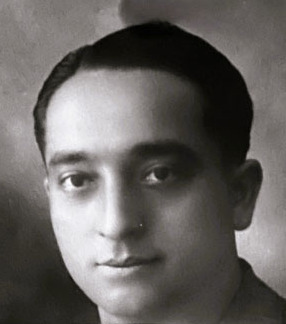
Empidonio Chendi
Born on February 3, 1903, Empidonio was originally from Berra (Ferrara), from where he was forced to flee at the age of 18 due to his anti-Fascist activities. He settled in Sesto San Giovanni, where there was a large community from Ferrara, and married in 1924. After holding several jobs from which he was fired for refusing to join the Fascist Party, he finally found employment at Falck Concordia, despite being a clandestine member of the P.C.d’I. (Communist Party of Italy).
His daughter recounts:
"On January 20, 1944, at 7:00 in the morning, my father was going downstairs with his bicycle on his shoulder to go to work when he encountered the Fascists on the stairs; in front of them was the doorman who, perhaps caught off guard, could do nothing but lead them up. There were many of them, all in Fascist uniform. My father was forced to return inside. I was in there with my mother. My father opened the door differently than usual—flinging both the outer and inner doors wide—so we jumped out of bed in our nightgowns. So many entered, too many for the house; every room was occupied, even the small balcony. My mother shouted: 'Who did you think you were coming to take?' I remember that before leaving, my father held the three of us in his arms and said goodbye."
Taken to Monza prison, he remained there—unable to see anyone—for two months, followed by several months in San Vittore until April 27, 1944. He was then sent to the Fossoli transit camp, where his family was finally able to see him. When the Fossoli camp was closed due to the approaching Allied troops, the prisoners were transferred to the Bolzano camp, from which Empidonio departed for Germany on August 7.
Four months of imprisonment had already passed, and an even more painful fate awaited him. His body endured the harsh conditions of the Mauthausen camp, and he was later transferred to Gusen, nicknamed the "cemetery of the Italians" due to the high number of deaths.
Empidonio held out until December: he died in Gusen on January 23, 1945, while admitted to the camp's Revier (infirmary), at only 42 years old.
His daughter recounts:
"On January 20, 1944, at 7:00 in the morning, my father was going downstairs with his bicycle on his shoulder to go to work when he encountered the Fascists on the stairs; in front of them was the doorman who, perhaps caught off guard, could do nothing but lead them up. There were many of them, all in Fascist uniform. My father was forced to return inside. I was in there with my mother. My father opened the door differently than usual—flinging both the outer and inner doors wide—so we jumped out of bed in our nightgowns. So many entered, too many for the house; every room was occupied, even the small balcony. My mother shouted: 'Who did you think you were coming to take?' I remember that before leaving, my father held the three of us in his arms and said goodbye."
Taken to Monza prison, he remained there—unable to see anyone—for two months, followed by several months in San Vittore until April 27, 1944. He was then sent to the Fossoli transit camp, where his family was finally able to see him. When the Fossoli camp was closed due to the approaching Allied troops, the prisoners were transferred to the Bolzano camp, from which Empidonio departed for Germany on August 7.
Four months of imprisonment had already passed, and an even more painful fate awaited him. His body endured the harsh conditions of the Mauthausen camp, and he was later transferred to Gusen, nicknamed the "cemetery of the Italians" due to the high number of deaths.
Empidonio held out until December: he died in Gusen on January 23, 1945, while admitted to the camp's Revier (infirmary), at only 42 years old.