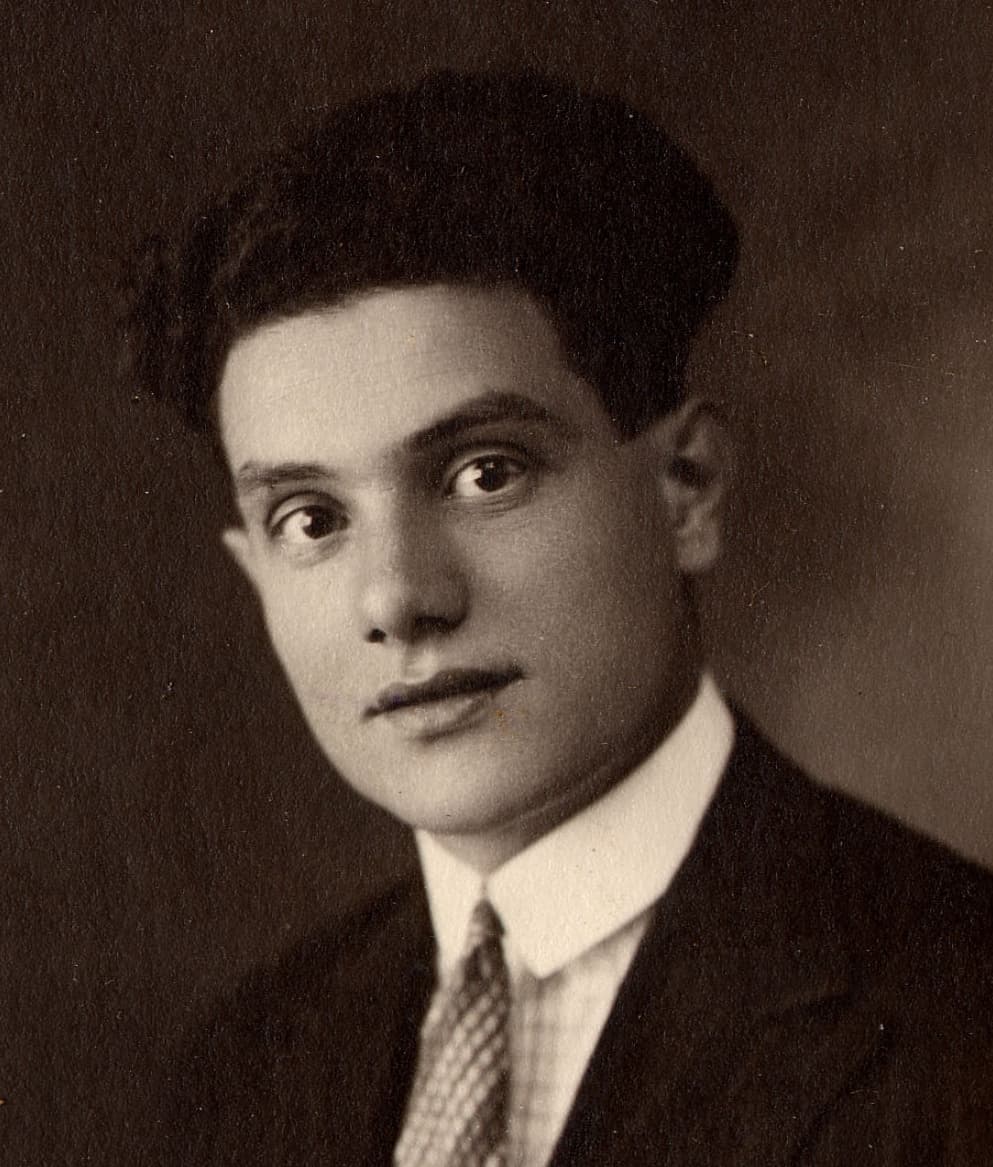
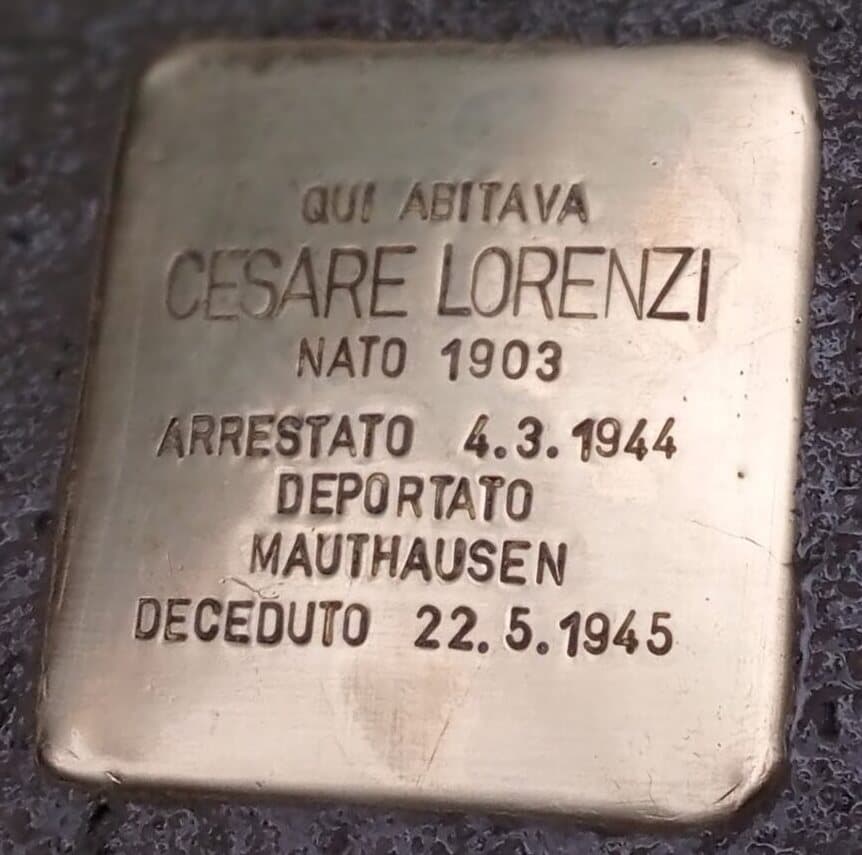
Cesare Lorenzi
Cesare Lorenzi was born on December 14, 1903, in Guardistallo (Pisa) into a modest family, the youngest of eight children raised by their socialist father with ideals of justice, liberty, and democracy. At the age of nineteen, he was arrested and tortured after being accused of killing a young Fascist. After six months of detention, he was found innocent and released. Following this dramatic experience, he moved to Sesto San Giovanni and found work as a specialized mechanic at the Falck Concordia plant, where two of his brothers were already employed.
In the factory, he built strong ties with numerous anti-Fascists who entrusted him with the role of treasurer for Soccorso Rosso (Red Aid). He participated in all the clandestine activities that culminated in the strikes of 1943 and 1944.
On March 4, 1944, two Fascists in civilian clothes stopped him on the street and took him to the San Fedele Barracks in Milan. He was held there for a month, during which—as an intimidatory tactic—he was subjected to a mock execution. Silence was his only response. Transferred to San Vittore prison, he was taken on April 8 to Platform 21 of Milan Central Station and loaded onto a train coming from Novi Ligure, which was carrying other strikers from Liguria. During a long stop in Brescia, he managed to see his wife and daughter who had reached him, having been alerted of his departure by a note he threw from the train and which was picked up by a passerby.
He arrived at Mauthausen on April 16 and was registered with the number 63754. After a few months, on December 1, 1944, he was transferred to Auschwitz along with 1,120 other detainees. On January 18, the evacuation of the camp began: the deportees were forced to march on foot through the winter frost and finally loaded onto freight cars back toward Mauthausen. Cesare was assigned to one of Mauthausen's 60 subcamps, Wien-Saurer Werke, where tank engines were produced. He died a few days after the liberation of the camp, on May 22, 1945, in the American 130th Evacuation Hospital in Mauthausen, due to tuberculosis.
In the factory, he built strong ties with numerous anti-Fascists who entrusted him with the role of treasurer for Soccorso Rosso (Red Aid). He participated in all the clandestine activities that culminated in the strikes of 1943 and 1944.
On March 4, 1944, two Fascists in civilian clothes stopped him on the street and took him to the San Fedele Barracks in Milan. He was held there for a month, during which—as an intimidatory tactic—he was subjected to a mock execution. Silence was his only response. Transferred to San Vittore prison, he was taken on April 8 to Platform 21 of Milan Central Station and loaded onto a train coming from Novi Ligure, which was carrying other strikers from Liguria. During a long stop in Brescia, he managed to see his wife and daughter who had reached him, having been alerted of his departure by a note he threw from the train and which was picked up by a passerby.
He arrived at Mauthausen on April 16 and was registered with the number 63754. After a few months, on December 1, 1944, he was transferred to Auschwitz along with 1,120 other detainees. On January 18, the evacuation of the camp began: the deportees were forced to march on foot through the winter frost and finally loaded onto freight cars back toward Mauthausen. Cesare was assigned to one of Mauthausen's 60 subcamps, Wien-Saurer Werke, where tank engines were produced. He died a few days after the liberation of the camp, on May 22, 1945, in the American 130th Evacuation Hospital in Mauthausen, due to tuberculosis.