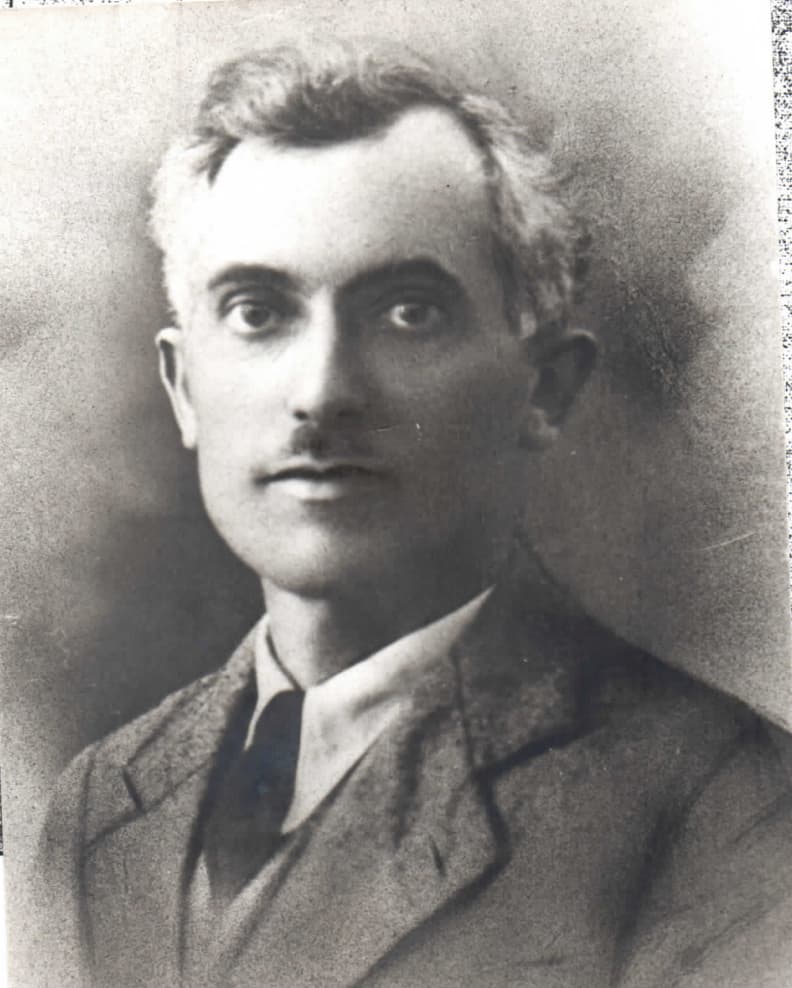
Celeste Bolognesi
He was born in 1884 in Montanaso Lombardo, in the Lodi area, from where he moved in 1912—like so many others—drawn by the industrial development of Sesto San Giovanni, which required an ever-increasing workforce. There, he married and had three children.
He worked at Breda (Section IV) as a turner, and his eldest son, Alfredo, worked alongside him. Both were active in the factory’s National Liberation Committee (CLN) and were supported by the rest of the family, especially after the second son, Arturo, a soldier, was imprisoned by the Germans.
His arrest occurred due to a mistake: Fascist militia arrived in the early hours of March 14 to arrest his son Alfredo, who was evidently more deeply involved in clandestine activities. Due to incorrect directions, they burst into the home of Celeste, who lived on the fourth floor; this allowed his son, who lived on the third floor, to evade capture.
Sent first to San Fedele prison, then to San Vittore, and finally joined with the prisoners gathered at the Umberto I barracks in Bergamo awaiting transport to the camps, Celeste departed on March 17.
Three days later, he was in Mauthausen, and by March 24, he was already in the Gusen subcamp. A sixty-year-old man, though in good health and accustomed to factory work, could only resist for a few weeks: on April 28, he was sent to the Sanitätslager—the camp infirmary where those unfit for work were sent. On May 16, his death was recorded, cited as being due to "pneumonia."
He worked at Breda (Section IV) as a turner, and his eldest son, Alfredo, worked alongside him. Both were active in the factory’s National Liberation Committee (CLN) and were supported by the rest of the family, especially after the second son, Arturo, a soldier, was imprisoned by the Germans.
His arrest occurred due to a mistake: Fascist militia arrived in the early hours of March 14 to arrest his son Alfredo, who was evidently more deeply involved in clandestine activities. Due to incorrect directions, they burst into the home of Celeste, who lived on the fourth floor; this allowed his son, who lived on the third floor, to evade capture.
Sent first to San Fedele prison, then to San Vittore, and finally joined with the prisoners gathered at the Umberto I barracks in Bergamo awaiting transport to the camps, Celeste departed on March 17.
Three days later, he was in Mauthausen, and by March 24, he was already in the Gusen subcamp. A sixty-year-old man, though in good health and accustomed to factory work, could only resist for a few weeks: on April 28, he was sent to the Sanitätslager—the camp infirmary where those unfit for work were sent. On May 16, his death was recorded, cited as being due to "pneumonia."