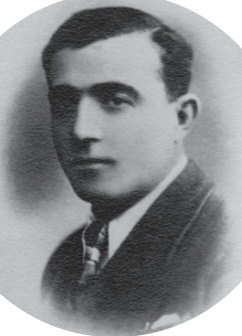
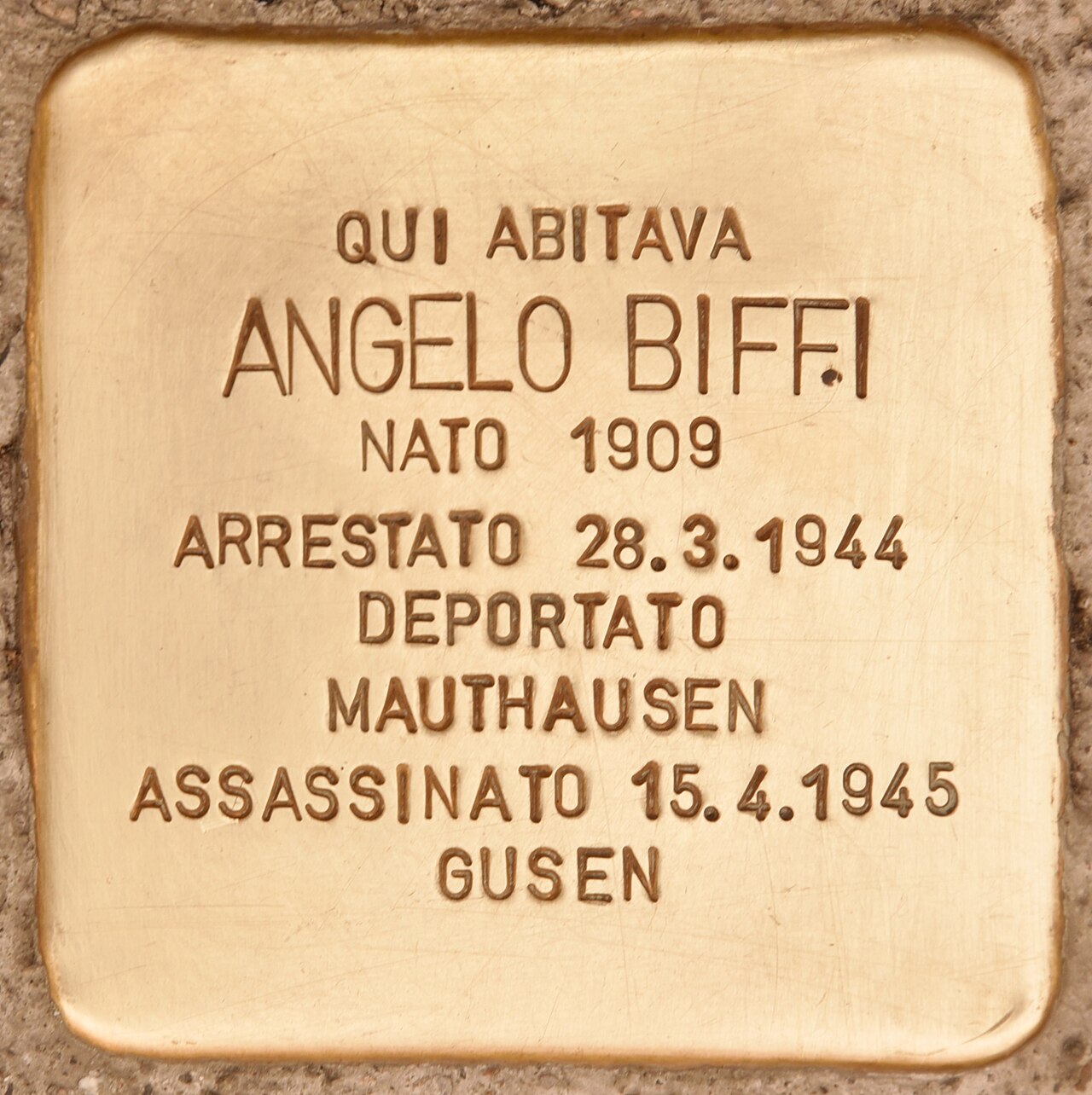
Angelo Biffi
Angelo Giuseppe Biffi was born in Villa D’Adda (Bergamo) on June 9, 1909, into a farming family, the eldest of four children. Following the sudden death of his father, he found himself responsible for providing financial support for his mother and three siblings. With the help of a maternal uncle, Angelo found employment at Falck in Sesto San Giovanni, where he became a specialized turner. He then moved his family to Sesto, married, and became the father of two daughters, the eldest of whom died at just three months old.
His uncle, a fervent socialist, helped him develop anti-Fascist ideas: Angelo did not join the National Fascist Party and participated in the Falck strikes of 1942 and 1943. He met regularly at a bar near his home with three friends and colleagues—Raffaele Cardellini, Pietro Marcante, and Guglielmo Sistieri—to organize their conduct within the factory against the Fascist war. He distributed clandestine press and joined the 184th Garibaldi Brigade "Luciano Migliorini," which operated inside the Falck plant.
After the armistice of September 8, 1943, the anti-Fascist struggle became a partisan resistance against Nazi-Fascism, and Angelo continued to spread his ideals. He took part in the strikes of March 1, 1944, which paralyzed industrial activity in Northern Italy for eight consecutive days. Because of this, he was arrested at his home at 2:00 AM on March 27, 1944. Imprisoned first at the San Fedele Barracks and then at San Vittore in Milan, he was later transferred to the Umberto I barracks in Bergamo.
It was there that he managed to see his young daughter, Ionne, for the last time (unfortunately, her mother was prevented from attending the meeting by the guards). He handed her several notes in which, among other things, he wrote:
"I am determined to follow my destiny. If fortune stays with me, we shall see each other again. Keep your spirits high, like mine."
He arrived at Mauthausen on April 8, where he was registered with the number 61566. On April 26, 1944, he was transferred to the Gusen camp, where he died on April 15, 1945. His family only received definitive confirmation of his death in 1956
His uncle, a fervent socialist, helped him develop anti-Fascist ideas: Angelo did not join the National Fascist Party and participated in the Falck strikes of 1942 and 1943. He met regularly at a bar near his home with three friends and colleagues—Raffaele Cardellini, Pietro Marcante, and Guglielmo Sistieri—to organize their conduct within the factory against the Fascist war. He distributed clandestine press and joined the 184th Garibaldi Brigade "Luciano Migliorini," which operated inside the Falck plant.
After the armistice of September 8, 1943, the anti-Fascist struggle became a partisan resistance against Nazi-Fascism, and Angelo continued to spread his ideals. He took part in the strikes of March 1, 1944, which paralyzed industrial activity in Northern Italy for eight consecutive days. Because of this, he was arrested at his home at 2:00 AM on March 27, 1944. Imprisoned first at the San Fedele Barracks and then at San Vittore in Milan, he was later transferred to the Umberto I barracks in Bergamo.
It was there that he managed to see his young daughter, Ionne, for the last time (unfortunately, her mother was prevented from attending the meeting by the guards). He handed her several notes in which, among other things, he wrote:
"I am determined to follow my destiny. If fortune stays with me, we shall see each other again. Keep your spirits high, like mine."
He arrived at Mauthausen on April 8, where he was registered with the number 61566. On April 26, 1944, he was transferred to the Gusen camp, where he died on April 15, 1945. His family only received definitive confirmation of his death in 1956