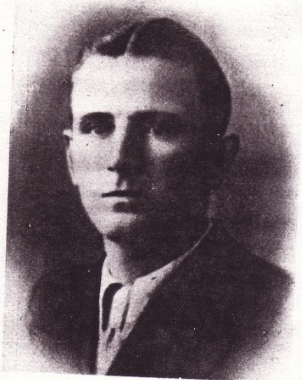
Angelo Barbieri
He was born in 1907 in a small town in the province of Milan, which from 1929 was named Borgo Littorio, and is now known as Borgo San Giovanni in the province of Lodi. After moving to Sesto San Giovanni, he worked at Breda (Section I) as a miller.
Married to Rosa Bonali, he had a nine-year-old son at the time of his arrest.
He had previously been sentenced by the Special Tribunal for the Defense of the State in 1931 for being a communist; he was imprisoned for three years and remained under special police surveillance until 1942.
Likely watched due to his record, he was arrested on March 14, 1944, following the strikes. He was taken during the night to the Sesto Police Headquarters, then to the San Fedele Prison in Milan, and finally to San Vittore.
From there, only a few days later, he was sent to the Umberto I barracks in Bergamo, where the transport to Germany was being organized for strikers arrested throughout Northern Italy. He departed from Bergamo on March 17 and, along with 562 comrades, was registered on March 20 with the number 58691. He was later transferred to the terrible subcamp of Gusen, known as "the tomb of the Italians" due to the high number of deaths. The survival rate of this convoy has been calculated at 60 percent: more than half died from exhaustion and hardship.
Angelo did not survive either. His death certificate cites "circulatory collapse" on March 7, 1945, at the age of 38.
Married to Rosa Bonali, he had a nine-year-old son at the time of his arrest.
He had previously been sentenced by the Special Tribunal for the Defense of the State in 1931 for being a communist; he was imprisoned for three years and remained under special police surveillance until 1942.
Likely watched due to his record, he was arrested on March 14, 1944, following the strikes. He was taken during the night to the Sesto Police Headquarters, then to the San Fedele Prison in Milan, and finally to San Vittore.
From there, only a few days later, he was sent to the Umberto I barracks in Bergamo, where the transport to Germany was being organized for strikers arrested throughout Northern Italy. He departed from Bergamo on March 17 and, along with 562 comrades, was registered on March 20 with the number 58691. He was later transferred to the terrible subcamp of Gusen, known as "the tomb of the Italians" due to the high number of deaths. The survival rate of this convoy has been calculated at 60 percent: more than half died from exhaustion and hardship.
Angelo did not survive either. His death certificate cites "circulatory collapse" on March 7, 1945, at the age of 38.