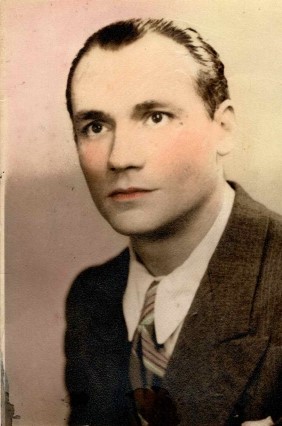
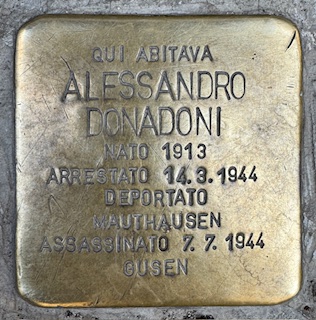
Alessandro Donadoni
A citizen of Sesto by birth, Alessandro, in addition to managing the concierge desk where he lived with his wife Gemma, worked as a mechanical riveter at Breda (Section II). Like many of his colleagues, he had joined the anti-Fascist cause after September 8, 1943, participating in the actions of the 128th GAP Brigade "Angelo Esposti."
On the night of March 14, 1944, at one in the morning, men from the Fascist Militia took him from his home and brought him to Milan—first to the San Fedele prison for interrogation and then to San Vittore, where the lists of strikers for deportation to Germany were being compiled. Alessandro was immediately included in the Streikertransport (strikers' transport) and sent to Bergamo, where the convoy of sealed wagons destined for Mauthausen was being formed.
On March 20, the deportees passed through the gates of the camp. After being stripped of all belongings and clothing and undergoing full-body disinfection, they were dressed in striped jackets and trousers, with a tin bracelet tied to their wrists with iron wire, and sent to the quarantine barracks.
Shortly thereafter, his destination was Gusen, the horrific "cemetery of the Italians," where labor, malnutrition, and exhaustion decimated thousands of men. His physical resistance lasted only four months, which gives an indication of the grueling labor he was subjected to—likely the excavation of the tunnels where Nazi armament factories were being relocated. Following his death from "pneumonia"—whether the record was true or false—his cremation was certified the following day. The communication to his family was made official the following August.
On the night of March 14, 1944, at one in the morning, men from the Fascist Militia took him from his home and brought him to Milan—first to the San Fedele prison for interrogation and then to San Vittore, where the lists of strikers for deportation to Germany were being compiled. Alessandro was immediately included in the Streikertransport (strikers' transport) and sent to Bergamo, where the convoy of sealed wagons destined for Mauthausen was being formed.
On March 20, the deportees passed through the gates of the camp. After being stripped of all belongings and clothing and undergoing full-body disinfection, they were dressed in striped jackets and trousers, with a tin bracelet tied to their wrists with iron wire, and sent to the quarantine barracks.
Shortly thereafter, his destination was Gusen, the horrific "cemetery of the Italians," where labor, malnutrition, and exhaustion decimated thousands of men. His physical resistance lasted only four months, which gives an indication of the grueling labor he was subjected to—likely the excavation of the tunnels where Nazi armament factories were being relocated. Following his death from "pneumonia"—whether the record was true or false—his cremation was certified the following day. The communication to his family was made official the following August.