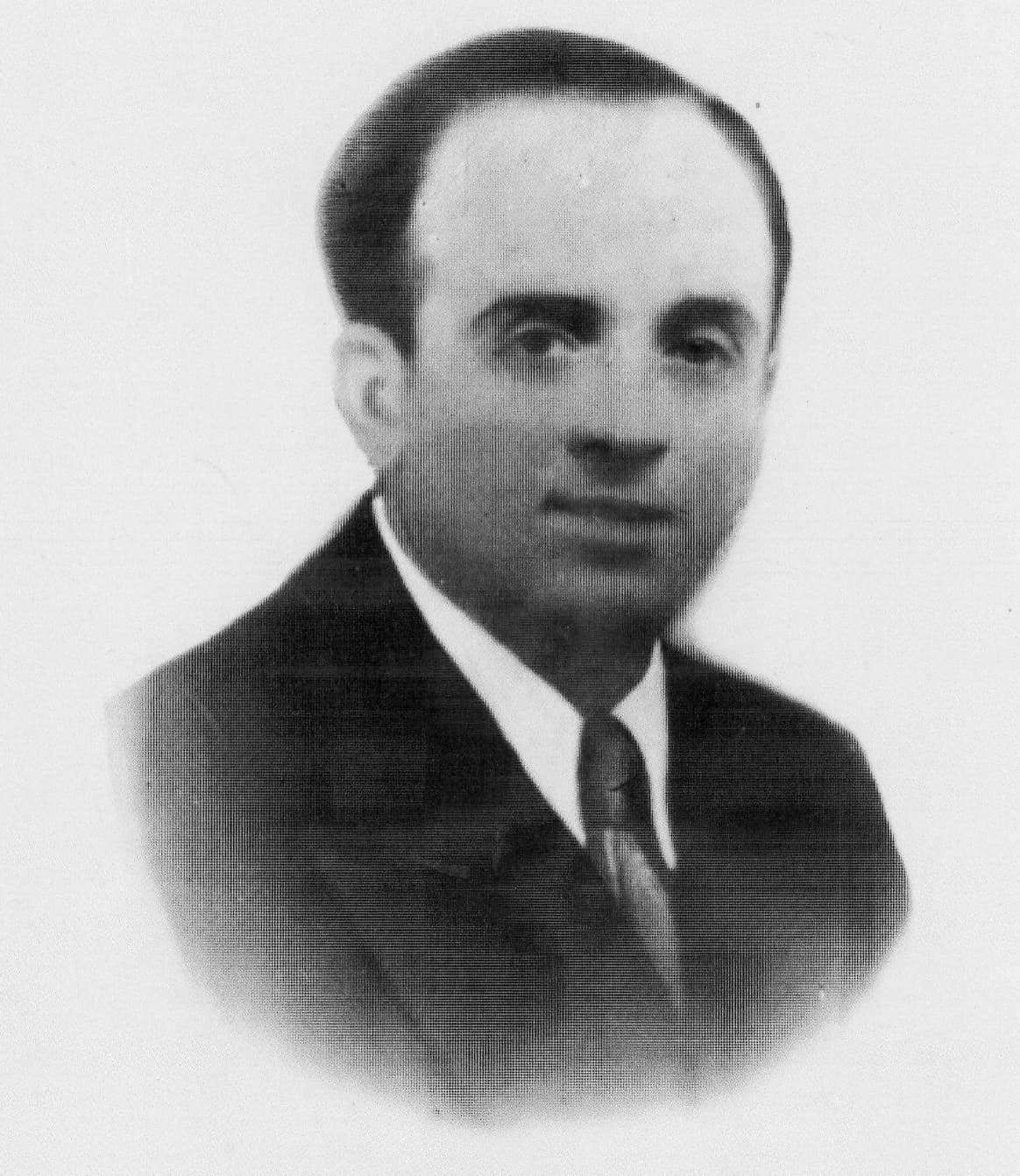
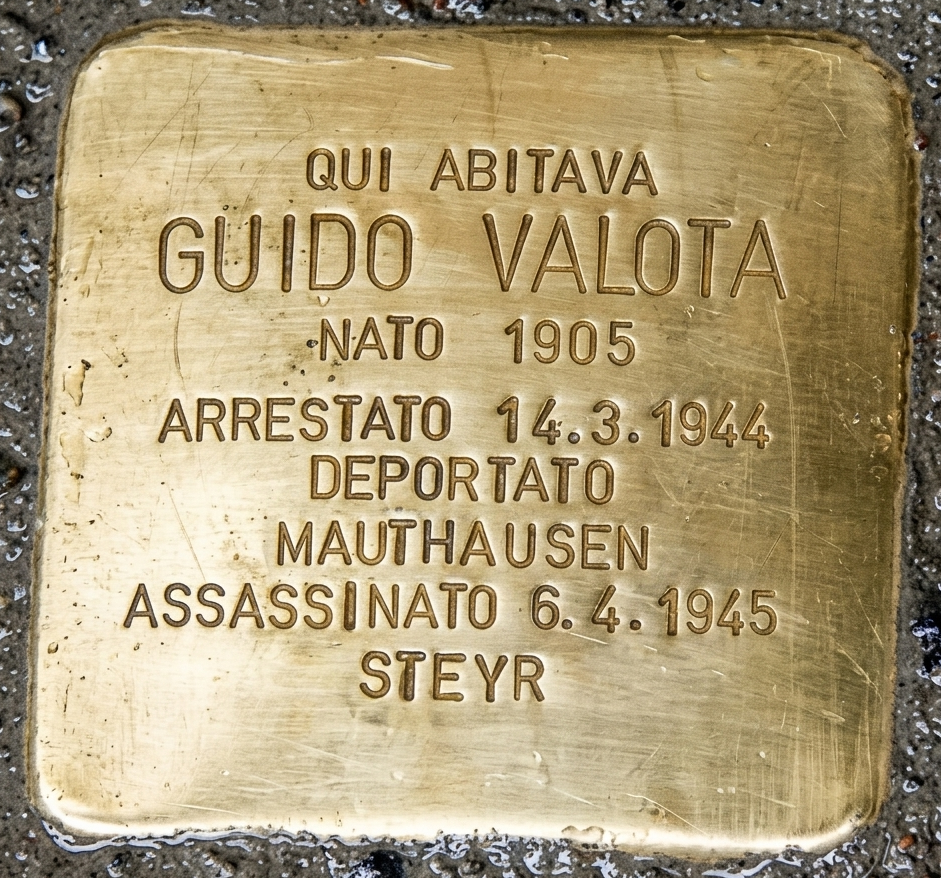
Guido Valota
Born on December 3, 1905, in Bariano, in the province of Bergamo. During the 1920s, he moved to Sesto San Giovanni for work: first hired at the Falck steelworks, then at Breda Aeronautica as a toolmaker. In 1942, he was forced by Falck to work at the BMW plant in Munich for an extended period.
Guido was a self-taught violinist and taught music to several students after work.
Following the armistice of September 8, 1943, he became more actively involved in anti-fascism, using clandestine ledgers to record funds received from the "Soccorso Rosso" (Red Aid) organization.
He was arrested at home during the night by Fascists on March 14, 1944, following the strikes that had spread across North and Central Italy starting on March 1st.
Imprisoned first at San Vittore, then in Bergamo at the Umberto I barracks, he was handed over to the Nazis for deportation. On March 20, 1944, he was registered at Mauthausen with the number 59186. He was initially transferred to Gusen, but in April, he was sent with many others to Wien Schwechat—the city's airport—where he remained until the major Allied bombing on June 26. In early July, he was transferred again, first to Wien Hinterbrühl to work in the Mödling caves, then to Wien Floridsdorf, where he worked in the cellars of the Gambrinus brewery on the construction of Heinkel aircraft parts.
On April 1, 1945, the subcamp was evacuated, and Guido set off with thousands of deportees from Vienna toward Mauthausen. These were the so-called "Death Marches," named by the deportees because they were forced to walk approximately 30 km a day, sleeping in the open without food, while hauling the Nazis' belongings.
On April 5 or 6, near Steyr, Guido could go no further. A Nazi tore the identification number from his uniform, crushed his identification bracelet with the heel of his boot, and shot him in the back of the neck. It was his marching companion and survivor, Adamo Sordini, who would later recount the final moments of his father's life to Giuseppe Valota.
Guido was a self-taught violinist and taught music to several students after work.
Following the armistice of September 8, 1943, he became more actively involved in anti-fascism, using clandestine ledgers to record funds received from the "Soccorso Rosso" (Red Aid) organization.
He was arrested at home during the night by Fascists on March 14, 1944, following the strikes that had spread across North and Central Italy starting on March 1st.
Imprisoned first at San Vittore, then in Bergamo at the Umberto I barracks, he was handed over to the Nazis for deportation. On March 20, 1944, he was registered at Mauthausen with the number 59186. He was initially transferred to Gusen, but in April, he was sent with many others to Wien Schwechat—the city's airport—where he remained until the major Allied bombing on June 26. In early July, he was transferred again, first to Wien Hinterbrühl to work in the Mödling caves, then to Wien Floridsdorf, where he worked in the cellars of the Gambrinus brewery on the construction of Heinkel aircraft parts.
On April 1, 1945, the subcamp was evacuated, and Guido set off with thousands of deportees from Vienna toward Mauthausen. These were the so-called "Death Marches," named by the deportees because they were forced to walk approximately 30 km a day, sleeping in the open without food, while hauling the Nazis' belongings.
On April 5 or 6, near Steyr, Guido could go no further. A Nazi tore the identification number from his uniform, crushed his identification bracelet with the heel of his boot, and shot him in the back of the neck. It was his marching companion and survivor, Adamo Sordini, who would later recount the final moments of his father's life to Giuseppe Valota.